In Translator’s second photo essay, Indian photojournalist Ishan Tankha reports from Kathmandu in the wake of the Gen Z protests
As the plane descended towards the Kathmandu valley, a sense of déjà vu settled in.
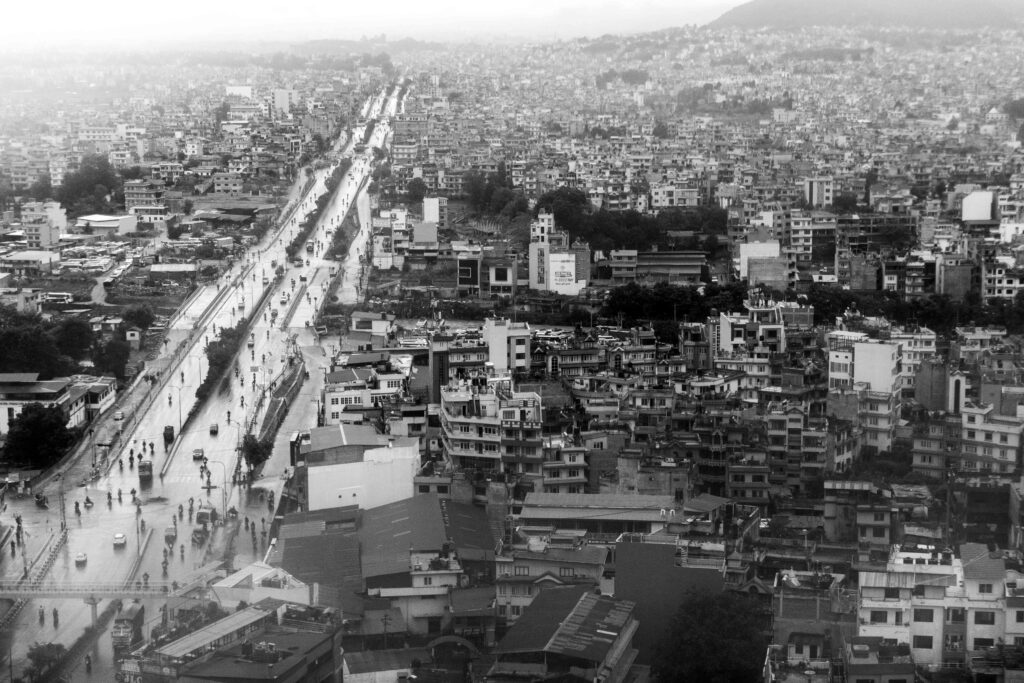
I looked out the window, scanning the city below for traces of the last 48 hours. Ten years ago, on another descent into Kathmandu, I’d searched for the scars left by an earthquake that split Nepal open and left 9,000 dead. This September, I wasn’t sure what I would find. From above, Kathmandu looked hollowed out. The city—usually teeming with cars and people—was a ghost town, caught between shock and silence.
I was headed there on assignment, in the wake of massive anti-corruption protests—dubbed the “Gen Z protests”—that had convulsed the capital since 8 September. Thousands of young Nepalis had taken to the streets against the government. The protests turned violent when police opened fire, bullets cutting down scores of demonstrators. The rage that followed swept through the city like fire. By the time flights resumed two days later, the world had already seen the images: flames licking the night sky, Parliament reduced to a shell. More than 70 people were killed. All that remained was a faint haze and the acrid scent of something burnt lingering over the valley.
As I looked at the torched buildings, the anger of the protestors was tangible in every scorched wall and shattered window. Yet when the curfew lifted and small groups of young people stepped onto the streets, their faces bore a different expression—part disbelief, part reckoning. Maybe they hadn’t expected things to go this far, or perhaps they knew that sometimes things must break completely before they can begin to mend.
On TikTok and Discord, Nepalis debated who their interim leader should be. No one knew what would come next, only what they didn’t want: no return of the monarchy and no army coup. Some even broke curfew to say so. By 13 September, the country had a new prime minister. The question remained, hanging in the air like smoke: can 6,000-odd votes in an online chatroom make a democracy?

Deserted streets of Kathmandu, captured from the first flight allowed into the city after the airport reopened on 11 September.

Nepalese army personnel patrols the streets of the capital after taking control. A ‘state of prohibition’ was enforced, restricting movement across the city and country.

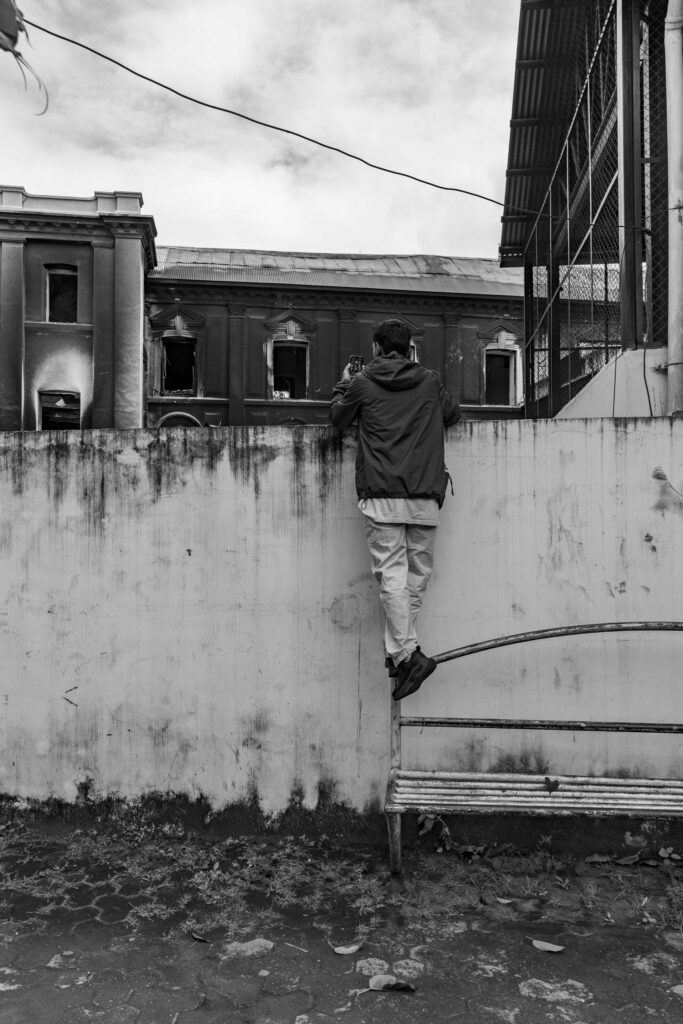
A man climbs a boundary wall to photograph the burnt remains of the Transport Ministry office. As the curfew lifted, curious people across the city came out to witness the aftermath of the 8 September violence.

Dissapearing graffiti shows a Nepalese army soldier.

People walk through the ruins of the Communist Party of Nepal (Unified Marxist–Leninist) office in Lalitpur. The party, led by K.P. Sharma Oli, saw its leader resign as Prime Minister on 9 September, amid nationwide protests and violence.

Inside the Nepal Parliament building destroyed by protesters on 9 September.

Curious onlookers crowded the parliament compound—some even bringing children—to witness the destroyed building firsthand. Many took photographs and selfies before they were removed by the army.

An eagle soars over Lalitpur, where soldiers guarded a main road during curfew.


Journalists and YouTubers raise their cameras to capture a glimpse of Sushila Karki as she leaves the President’s residence after being appointed Nepal’s new Prime Minister.
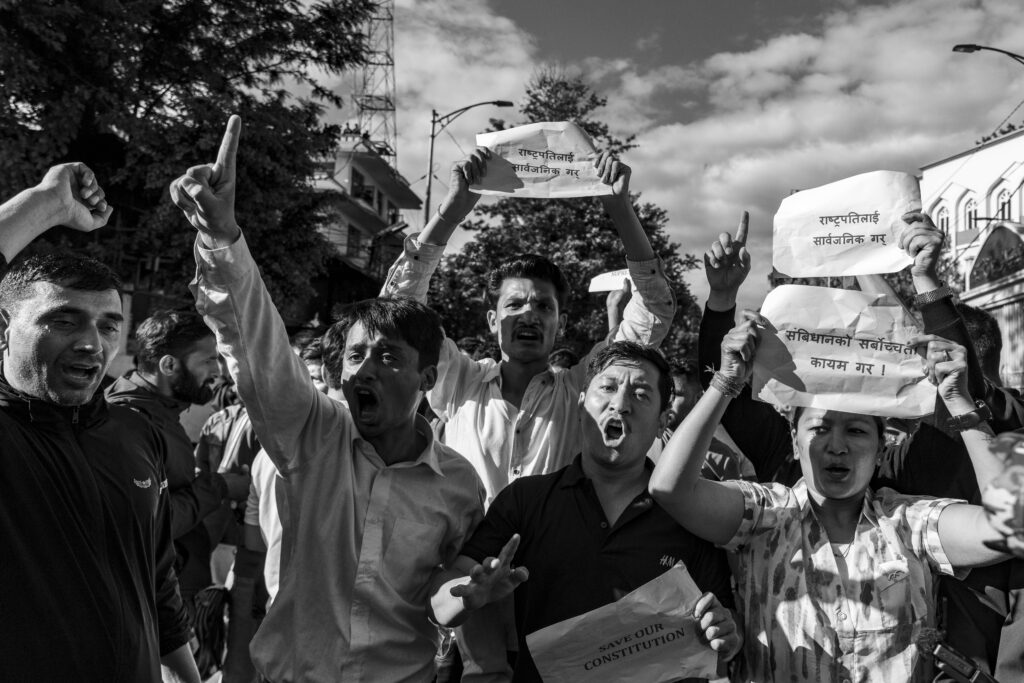
Protesters defy the curfew, holding placards demanding the protection of the constitution and democracy.

Sudan Gurung, founder of Hami Nepal—a youth-led NGO—breaks down during a press conference at the Reporters Club in Kathmandu. Gurung has become one of the faces of the Gen Z revolt. After losing his child in the 2015 earthquake, he became an activist and worked on disaster relief, according to The Annapurna Express.

Visitors and onlookers gather to witness the cremation ceremonies for the students, protesters, and police officers killed during the protests.

Family and friends mourn Shreeyam Chaulagain at his funeral, the first student shot dead by police during the September protests, which left 51 dead.

12 September 2025, a pigeon flies over the Pashupatinath temple complex as smoke rises from the cremations of those who died in the Gen Z protests. People gather to watch until the entire funeral pyre has burned to ash and is then swept into the Bagmati river.