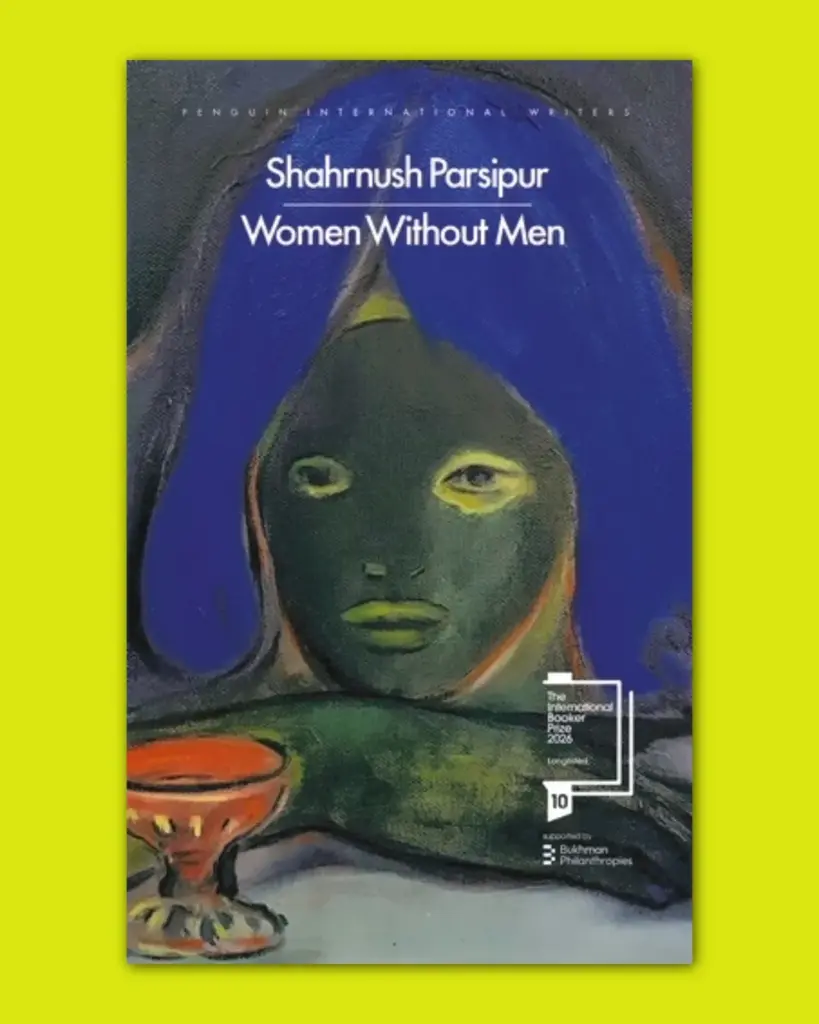
By Shahrnush Parsipur, translated by Faridoun Farrokh
(Penguin, 2026), 128 pages
Reviewed by Zanta Nkumane
Shahrnush Parsipur’s novella, Women without Men, was first published in Iran in 1989 and was banned almost immediately. The book follows five women in 1953 Tehran including Farrokhlaqa, a wealthy housewife; Faizeh, a schoolteacher; Zarrinkolah, a sex worker; Mahdokht, who plants herself in the ground and literally becomes a tree; and Munis, killed by her brother and reborn. They live under a tyranny of patriarchal instruction and their lives converge on a garden outside the city, where they attempt to live without men.
1953 is a notable temporal backdrop: the year a US and UK-backed coup toppled the popular Mossadegh government, leading to a clamp down on a burgeoning women’s movement. In this context, the personal and the political collapse into one another. Parsipur refuses any separation between them, arriving together as a devastating, single blow.
The magical realism of the book doesn’t feel like an interruption to the narrative. Rather, it is threaded throughout, smartly surfacing when reality can no longer carry the weight of the violence the women endure. Munis is killed by her brother and returns to life and Mahdokht plants herself in the ground and grows roots. These surreal moments do not fracture the narrative but complicate and deepen it because Parsipur reserves realism for violence and fantasy for survival. Ultimately, the surreal is used to say what realism cannot.
Women Without Men is unsettling in the best possible way. It does not rely on dramatic revelations or rising tension. Instead, its matter-of-fact prose carries horror and tenderness in the same breath, asking the reader to hold both at once. There is no invitation to cry for the characters or the softening of their experiences, but the violence arrives with the same silent certainty as everything else. Parsipur trusts the reader to recognise the brutality without instructing on how to feel. I think that restraint is its own political gesture because she refuses to perform suffering for sympathy, choosing instead to record it with the clarity of someone who has lived in proximity to that violence. As a writer imprisoned twice for her work, it is understandable why she has little interest in sentiment.
At a mere 128 pages, Women Without Men contains more story and more world than novels twice or three times its size – and yet, it does not feel rushed in any way.