An investigation reveals how one of Sudan’s richest wildlife sanctuaries has been stripped of its wildlife and protections
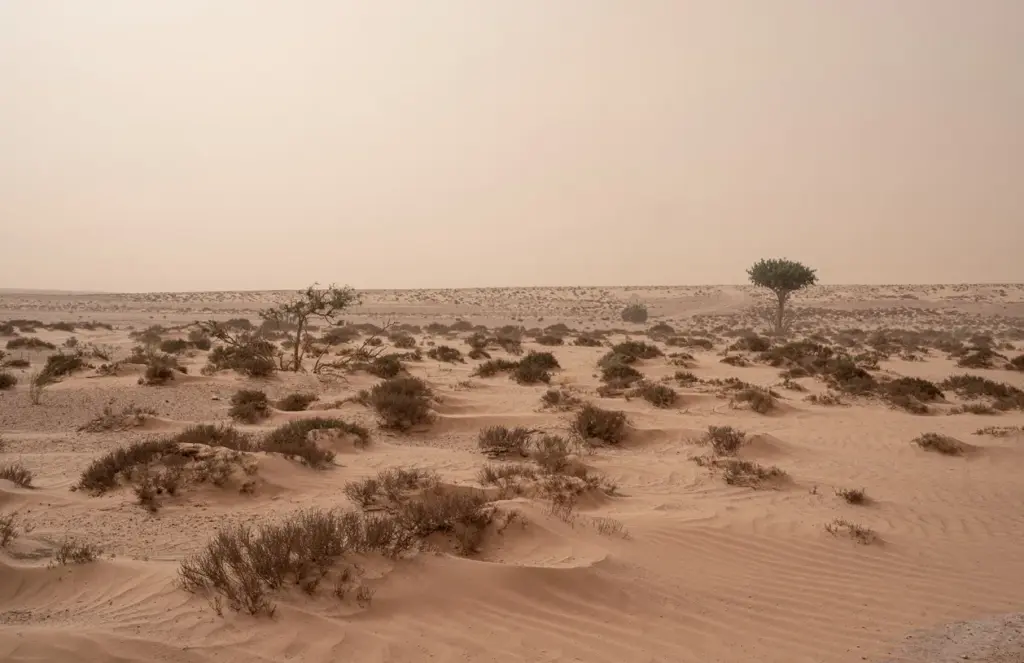
In Sudan’s remote southwestern corner, where the country meets South Sudan and the Central African Republic, lies the Radom Biosphere Reserve. Covering some 12,500 square kilometres, it was once home to elephants, white rhinoceroses, antelope, leopards and migratory birds, making it one of Sudan’s most important protected ecosystems.
In an investigation for Khatt30, Sudanese journalist Heba Abdel Azim documents how three years of war have transformed the reserve into an open landscape for gold mining, military activity and wildlife exploitation.
The investigation opens with the testimony of a former park ranger who spent decades working in Radom. Looking back on the reserve today, he describes a landscape where animal tracks have been replaced by military vehicles and open-pit mines. Many rangers have left since the outbreak of civil war in 2023, while others reportedly joined the Rapid Support Forces (RSF), leaving the reserve without meaningful protection against illegal mining, logging or poaching.
Abdel Azim traces the expansion of gold mining inside the reserve to before the current war, arguing that the RSF had already established control over a mining concession there between 2020 and 2021. Since fighting erupted, mining has accelerated dramatically. The investigation estimates that more than 200,000 people now work in gold mining and related activities in and around the reserve. In contrast, gold leaves the area through constantly shifting smuggling routes before being exported abroad, often after its origin has been disguised in neighboring countries.
Because access to the reserve is now almost impossible, the investigation combines interviews with residents, government officials and environmental experts with satellite imagery and AI-assisted image analysis. Together, these sources point to expanding dirt roads, widespread tree loss, growing mining sites and shrinking vegetation cover. Residents also describe hidden military training camps, child labour at mining sites, cross-border gold traders and recurring fires linked to mining operations.
The environmental consequences extend well beyond deforestation. Experts interviewed by Abdel Azim warn that mercury, cyanide and other chemicals used in gold extraction are contaminating soil and water, while unchecked hunting has devastated wildlife populations. Some animals are killed to feed mining communities; others enter regional trafficking networks dealing in ivory, animal skins and rare species. One recent example cited in the investigation is the reported hunting of a pangolin, prized for both its meat and scales.
The investigation argues that Radom’s destruction reflects a wider transformation in Sudan’s wartime economy. Since South Sudan’s independence in 2011 deprived Sudan of most of its oil reserves, gold has become one of the country’s most valuable resources, and, according to experts and reports cited by Abdel Azim, one of the principal sources of financing for the conflict. As environmental governance has collapsed alongside state authority, one of Sudan’s oldest biosphere reserves has been left vulnerable to competing armed and commercial interests.
Abdel Azim also presents Radom as a case study in how conflict reshapes entire ecosystems. The reserve’s forests, wildlife and waterways are disappearing alongside the institutions that once protected them, raising questions about whether recovery will still be possible long after the fighting ends.

The original article ‘عن حرب الذهب الصامتة.. كيف فقدت محمية الردوم أسوارها؟’ was published in Arabic by Heba Abdel Azim for Khatt30 on June 15, 2026.
Khatt30 is an independent digital and visual platform capturing human experiences and daily life from communities located along the 30th parallel north (latitude 30) region.
Summary by Cendrella Azar