Photography by Abdul Bacet
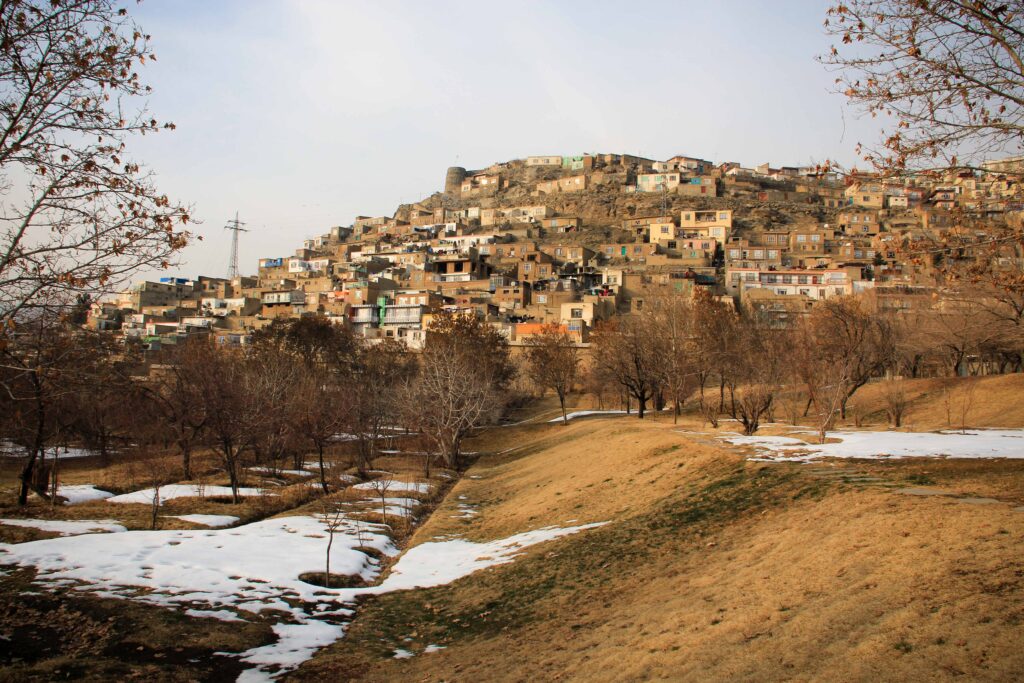
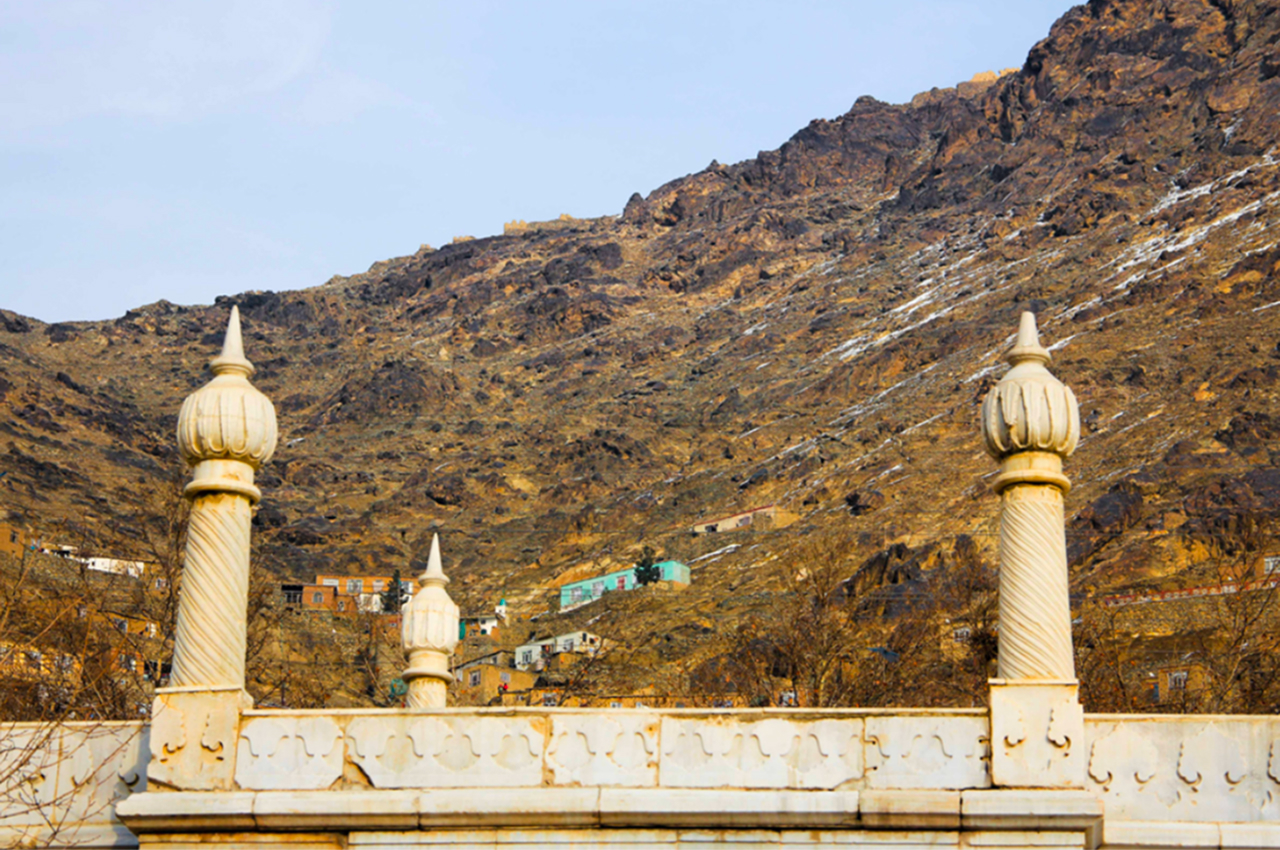
On the south-western foothills of the Sher Darwaza mountain in Kabul lies Bagh-e Babur, a 500-year-old garden. In 1504, Babur – the first emperor of the Mughal Empire – chose this location for his garden because of its admirable climate and commanding view over the city.
Babur was exiled from his ancestral home- land of Fergana (modern-day Uzbekistan) at the age of 14, taking refuge with his uncle Sultan Mahmud Khan in Tashkent. At one of the lowest points in his exile Babur wrote in his memoirs, The Baburnama, “my heart has found no joy in this exiled state” – a sentiment that still reso- nates deeply with those forced out of their homeland.
But when Babur captured Kabul in 1504, it was love at first sight. In this city – now governed by explosions and choked by pollution – he finally found a place to call home.
The garden extends across 15 stepped terraces, split by a series of watercourses and divided longitudinally by a central avenue. In its full splendour trees, were laden with fruit; trees blossomed and flowers were woven into symmetrical patterns; fountains erupted with water and the gardens evoked Paradise.
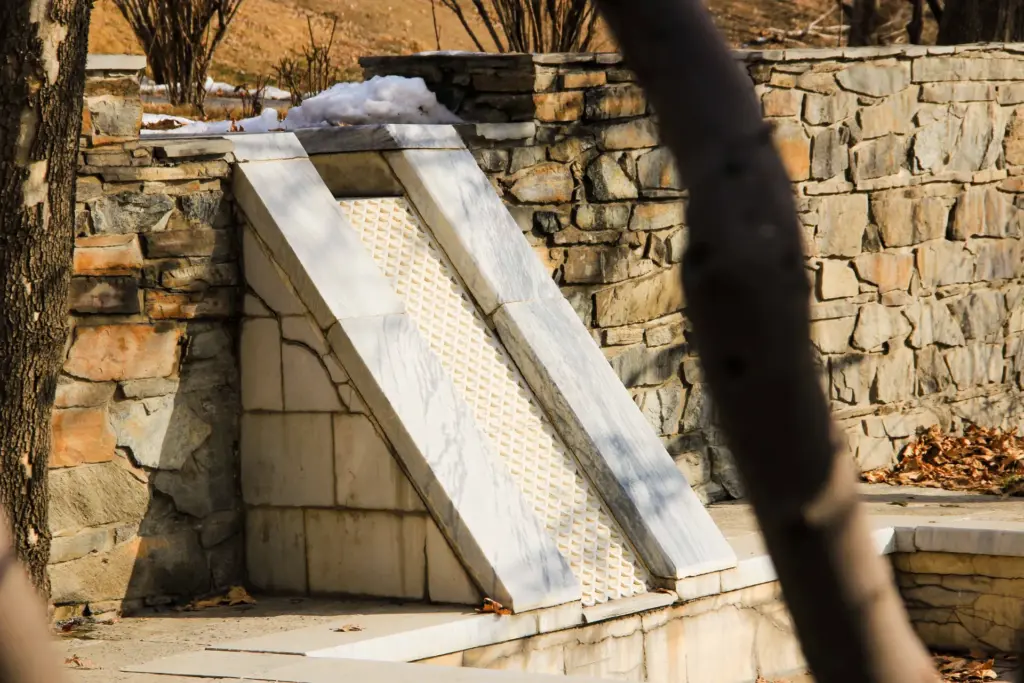
Over centuries, Babur’s successors made various renovations to his original design, such as these central watercourses which Mohammad Nadir Shah redesigned when he declared the garden a public park in 1930.
The original character of the gardens is somewhat lost as winter tightens its grip on the city. Where sheets of water once fell from one terrace to another; now the narrow watercourses are empty and the underground roots hold on to the promise of spring.
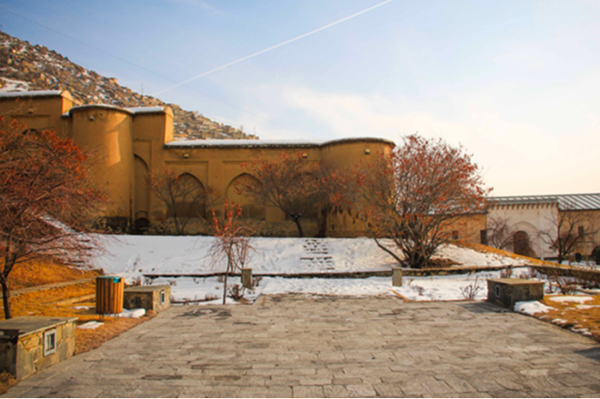
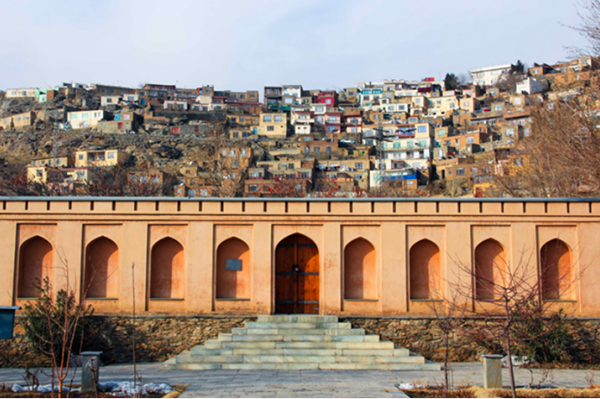
These walls have been built and rebuilt across centuries first by Emperor Jahangir, by Amir Abdur Rahman Khan, and again after the devastation of the Afghan Civil War. Constructed by hand using the traditional Pakhsa technique, the walls tell a familiar Afghan story: destruction and stubborn reconstruction, again and again.
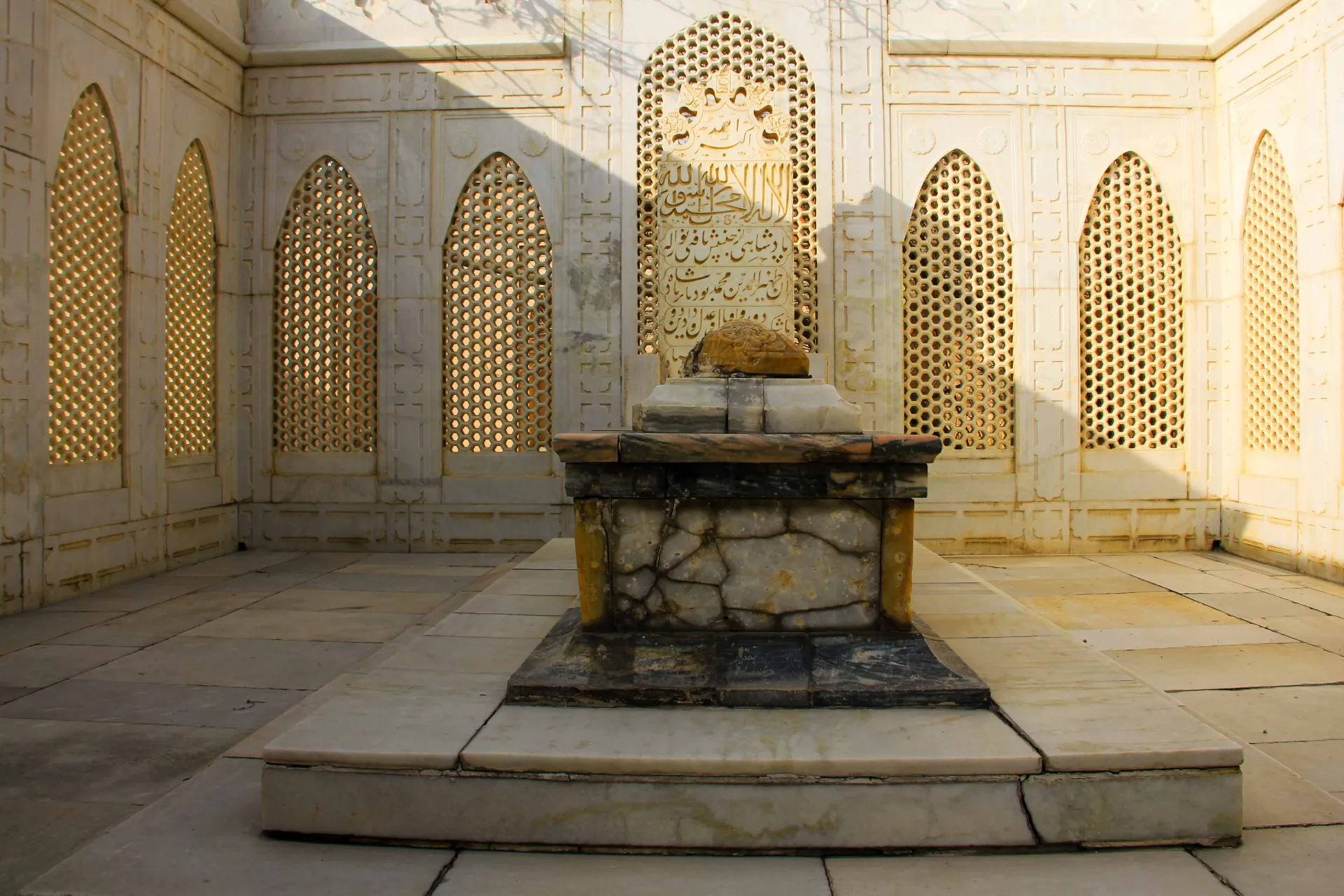
Babur died in Agra, India, in 1530, aged 47. Against his explicit wishes, he was initially buried there in Aram Bagh, before his remains were transported thousands of kilometres to Kabul by his fifth wife, Bibi Mubarika –also known as Afghani Aghacha. A Pashtun woman, she had introduced Babur to Afghan culture and played a vital role in his court, helping to bridge the Afghan and Mughal worlds. Her story is often overlooked, yet she rests here, next to Babur.
He requested that no roof should be built atop his grave, so that he could feel the rain falling gently and the wind blowing over its surface. He wanted his resting place to be under the sky of Kabul forever
Almost destroyed during the Afghan Civil War, the gardens fell into ruin. After the Taliban were driven out in 2001, the garden became a focal point for restoration, a symbol of hope and renewal for the city.
Between 2002 and 2006, the The Aga Khan Trust for Culture relied on Babur’s memoirs and archaeological evidence to replant 4,000 saplings of species mentioned by Babur, such as pomegranate, apricot and cherry trees; Shah Jahan’s mosque was restored; the Queen’s Palace was rebuilt; Babur’s tomb extensively restored, and its cascading pools and channels were decorated with marble.
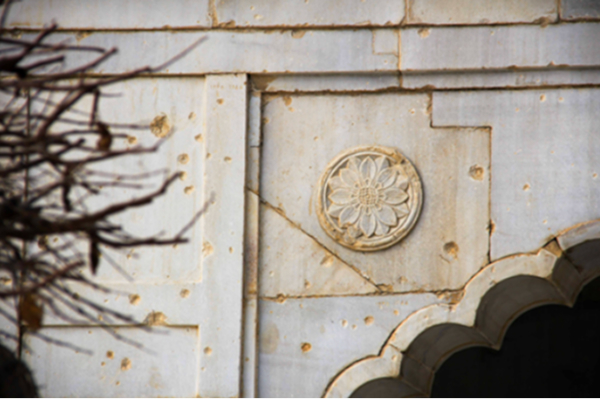
But the buildings still bear the scars of centuries of warfare and vandalism; pockmarked by bullets similar to the markings on my old house.

Following the fall of Kabul and the return of the Taliban in August 2021, the gardens have suffered immensely.
The Taliban have banned women from going to parks and public places. And for men walking these gardens without the women in their lives beside them, even the most beautiful places have lost their colour.
One of the garden’s caretakers tells me that more than 100 people used to work here; now, there are only 17. He talks about his salary being cut; youths carving names on the trees, walls, doors and even the gates to the Queen’s Palace; but, most painfully, how absence hangs over its terraces like the fog that engulfs this city.
At least the Gardens of Babur have been spared the fate of many others across Kabul – at Bagh-e Bala, trees were cut down, it was partially flattened and a wedding hall and petrol station will be built in its place; Shahr-e Now Park will be turned into a business centre, and Bagh-e Zanana (Women’s Park) has been converted into the offices for The Ministry for the Propagation of Virtue and the Prevention of Vice.
Babur described Kabul as his “lucky piece” and commanded that none should covet it. He could not have imagined what would become of his beloved city.