Inside the dark afterlife of Yemen’s ancient mummies
From the towering heights of Hababa, an old historic village northwest of Yemen’s capital city of Sana’a, a man in his fifties was partaking in his usual hobby: scanning the area’s surrounding vast plains with his binoculars while chewing on qat.
قات (qat). A leaf with stimulant properties widely chewed on in Yemen (where it’s deeply embedded in local traditions), as well of parts of eastern Africa and Saudi Arabia (where it’s strictly illegal, and smugglers – many from Yemen – face harsh consequences).
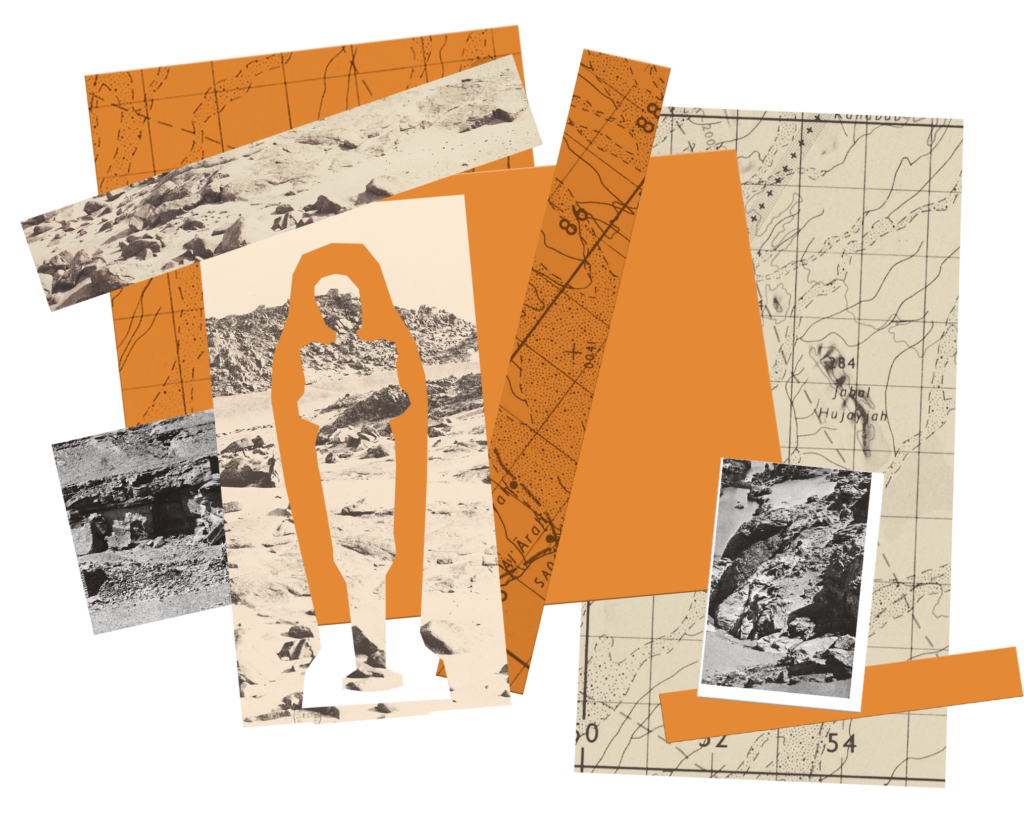
Hussain, who is local to the area, had gazed out over this landscape many times. Yet today, he saw something that looked a little off: a large, slightly tilted boulder with an opening that made it look almost like a half-hidden doorway into the mountain behind it. Hussain made his way down to the gap, moved the boulder aside and pushed his way through – only to discover the body of an embalmed mummy lying in a stone cavity, with carvings from an old and seemingly incomprehensible language written on the walls above its decayed head.
Embalmed mummy From the Persian word mūm (“wax”) via the Arabic mūmiyā and then the medieval Latin mumia.
It is common knowledge locally that there are mummies scattered through the mountains of Yemen, a country with a long indigenous tradition of mummification. Historically, Yemen is one of the few places to have developed the technique of using aromatic plant materials to preserve and mummify the deceased. Radiocarbon dating allows us to date such practices back to the third century BCE. According to the 2025 study ‘Yemeni mummies: A history between preservation and loss’ the process used historically in Yemen differs significantly to that of the ancient Egyptians, typically involving salting and drying bodies out using herbs, aromas and resins, before wrapping them in linen saturated in aromatic materials and natural oils.
Mummification The process of preserving a dead body so it does not decay.
Radiocarbon dating Also known as carbon-14 dating, this method is used by archaeologists to determine the age of organic materials.
Resins After being dried out with salt and other drying agents, fragrant herbs and resins (including but not limited to biblical frankincense and myrrh) can be used to stabilise and then seal the body.
"Yemeni mummies" The full Arabic text of the paper cited here is available online. For an extended English-language discussion of many of the same issues, including the long history of grave robbing, see ‘The Yemeni mummies: a brief report and comprehensive bibliography’, Proceedings of the Seminar for Arabian Studies 54 (2025), p.48–64.
Mummification was widespread across ancient Yemen, says Taghreed Safarjal, a Yemeni researcher in Sana’a University’s Department of Archaeology and Tourism. In addition to the regions of Sana’a and Al-Mahwit, mummies have also been found in cave burial sites in Dhamar, Al-Jawf, Shibam (in the Bani Hushaysh District northeast of Sana’a), the city of Kawkaban, and inside the mountain-carved tombs of the Taiz governorate.
The burial sites in which mummies tend to be found are categorised into three main types. The first are deep caves: those located on rocky cliff faces, difficult to access without advanced climbing equipment. The second are rock shelters: openings on mountain slopes, essentially. The last are carved rock burials: those carved out using sharp tools, generally found near settlements.
Such carved rock burials are typically made up of multiple rooms. One example are the Shibam caves, cut into an archaeologically-rich mountainside northeast of Sana’a. These burial sites are believed to date back to the Saba and Himyar civilisations, ancient kingdoms which existed on the territory of present-day Yemen between the tenth century BCE and the sixth century CE. This attribution is attested to by the discovery of ancient scripts carved into the rock surfaces of the caves, which researchers have identified as examples of some of the oldest Arabic writing systems used in ancient Yemen.
Saba and Himyar: Ancient Arabian kingdoms centred in central and highland Yemen respectively. Saba is sometimes rendered in English as the biblical Sheba.
Mummies under threat
After discovering the mummy, Hussain’s initial concern was how best to ensure its preservation. Placing the boulder back with care in order to protect the site, he immediately reported his finding to Mohammad Rajeh, the Deputy Director General of the General Authority for Antiquities and Museums in Al-Mahwit, a governorate northwest of the capital. The mummy was subsequently transferred to the National Centre for Mummies in Tawilah for safekeeping. Not all mummies stumbled across by members of the public are handled with the same level of care.
A few years ago, the General Authority for Antiquities in Sana’a received an embalmed mummy corpse, brought in by the police who had rescued it from a rubbish dump where it had been abandoned most likely by grave looters (who had also dismebowelled it). Across Yemen, mummies are frequently disposed of or mishandled during looting by illegal grave diggers – an activity as common as it is widespread across the country, with local authorities often turning a blind eye.
The number of illegal excavations in the governorate of Taiz rose significantly after the outbreak of the Yemeni civil war in 2014/15, according to Ahmad Jasar, Deputy Director General of the General Authority for Antiquities and Museums, in an exclusive interview with Al-Araby. Last year, his office received 10 reports of archaeological sites being vandalised in various districts across the region. Jasar said that the known locations of mummies in the area are now only disclosed to specialists – in order to protect them from thieves.
The Yemeni Civil war began when Houthi forces seized the capital Sana’a in late 2014. President Hadi was forced to resign in early 2015. A Saudi-led Arab coalition intervened militarily a few months later.
Eyewitness accounts provided to Al-Araby indicate a similar event at an archaeological site in Zijan, a village in the Bani Hushaysh district, where many Himyarite tombs are located. An investigator visited the site only to find the scattered remnants of digging activity – piles of soil and fragments of pottery – signifying that an illegal looting operation had taken place there. Senior local official Rajeh Al-Hinmi said that some 10 other archaeological sites in the area have similarly been randomly dug up and despoiled by profit-seekers.
In a few cases, mechanical stone crushers – the kind used to break down rocks for the construction industry – have caused lasting damage to these precious archaeological sites. Yaser Abdallah, a Zijan local, was shocked when he found a mummy that had been disposed of during one of these crushing operations. “The workers threw the mummy off the top of the mountain. It was wrapped in a thin layer of leather, with a complete body and a prominent beard, wearing green onyx jewellery.”
Stolen and sold
In recent years, there has been an increase in reports of looting operations carried out by organised gangs involved in the illegal trade in mummies and other antiquities. According to Khaled Ghaleb, a senior heritage official in Ibb governorate, on one occasion in 2021 thieves engaged in a nighttime raid on an archaeological site in the locality of Al-Damgh in the As-Sayyani District found a mummy in the course of their search for valuable grave goods. In this particular case, the authorities were able to detain those involved in the crime and uncover their connection to a gang specialised in the looting and trading of antiquities. “The ages of mummies are estimated to be more than 2,500 years old; we hope that the higher authorities would give more attention to this field to protect what remains of Yemeni heritage,” Ghaleb said.
While the state does offer financial rewards for those who report the discovery of mummies, the sum provided is far less than what private dealers will pay. Take the story of a man in his twenties residing in Taiz, who requested he be identified here only as “Abdo”. His friend found part of a mummy and two pieces of ancient Himyarite metal coins while out on a picnic near town. “It was completely unexpected,” Abdo said. Hoping to reap some financial benefit from the discovery, the pair went along to the local heritage office, only to be offered a “meagre” sum by officials who explained the state simply didn’t have the reosurces to pay anything more.
Abdo and his friend left the building disheartened. But almost at once, a local government employee came out after them offering a “high price” in exchange for the mummy and the coins. He also shared details of Facebook groups run by traders selling mummies and other antiquities where users swap phone numbers and post comments on artefact smuggling and trading.
Evidently, Abdo says, some of those tasked with officially registering the discovery of such pieces have become dealers instead. He decided to document this, sending a message to a trader with pictures and videos of the mummy they had found. He also sent over other images of other antiquities he had found on specialised sites, with the aim of figuring out just how such items are being sold – and who is buying them, particularly outside Yemen.
The trader, who introduced himself as Mohamad Al-Ghirbani, wrote back: “The price depends on your luck, on how old it is and the foreign buyer. But it won’t be less than US$10,000 [around £7,400].” In essence, traders such as Al-Ghirbani acts as middlemen between buyers and sellers. Once an agreement is reached, the item will be smuggled out of Yemen by a specialised team with networks all over the country. Prominent routes include: across Yemen’s northern land border, via the eastern region of Hadhramaut or through the port of Mokha. From there, the artefact will be passed on to dealers in the United Arab Emirates and Jordan – and ultimately Europe. A source involved in the fight against contraband antiquities who declined to be identified confirmed that such items are mostly smuggled out through sea ports such as Mokha, on the Red Sea, well known as “weak points” in Yemen. Many prohibited items are smuggled this way, he added.
Investigative reporters at Al-Araby found an advertisement for a mummified animal being sold for US$15,000 (£11,000). They messaged the WhatsApp number on the ad and contacted the seller – who claimed to be residing in the Sana’a governorate’s northwestern Hamdan District – to ask about the excavation of human mummies. The seller replied that such a job would require special tools and incur higher costs, but it was possible, and his group was “willing to implement this at any given moment.” He set the price of one mummy between US$20,000 and US$30,000 (roughly £15,000-£22,100), depending on its condition and the depth of the excavation required.
And so the looting and loss of Yemen’s heritage continues.
Heritage at risk
The mummy found by Hussain is now on display at the National Centre for Mummies in Tawilah. Next to it are five skulls, some bones found in the surrounding area – and several boxes filled with fragments of other mummies.
Nationwide, whatever mummies have made it into the hands of the authorities are stored or displayed in a variety of different museums and research institutions. Amjad Ismail, a researcher, told Al-Araby there are currently 10 in the National Museum of Yemen – including a unique mummy baby – and six in the Antiquities and Tourism Museum at Sana’a University.
Even here, however, they are far from safe. Though protected from thieves, there are other risk factors to their survival. Scarce resources mean most mummies are poorly stored and displayed, causing them to degrade over time. Dr. Amida Sholan – professor of Archaeology and Ancient Languages at the University of Sana’a – expresses regret over how such a significant part of Yemen’s cultural heritage is now at risk.
“All the mummies discovered in Yemen have been damaged as a result of tampering, the way they’ve been transported, or their removal from their protective leather covering,” Sholan said. “Only one mummy remains intact.” 
Original article ‘مومياوات اليمن… نهب منظم أو تعفن وضياع للأبد ’ published by Al-Araby Al-Jadeed on 30 November, 2025.
Design by Sofia Azcona