A piece from Voima examines Finland’s move from productive industry at home to extractive industry abroad
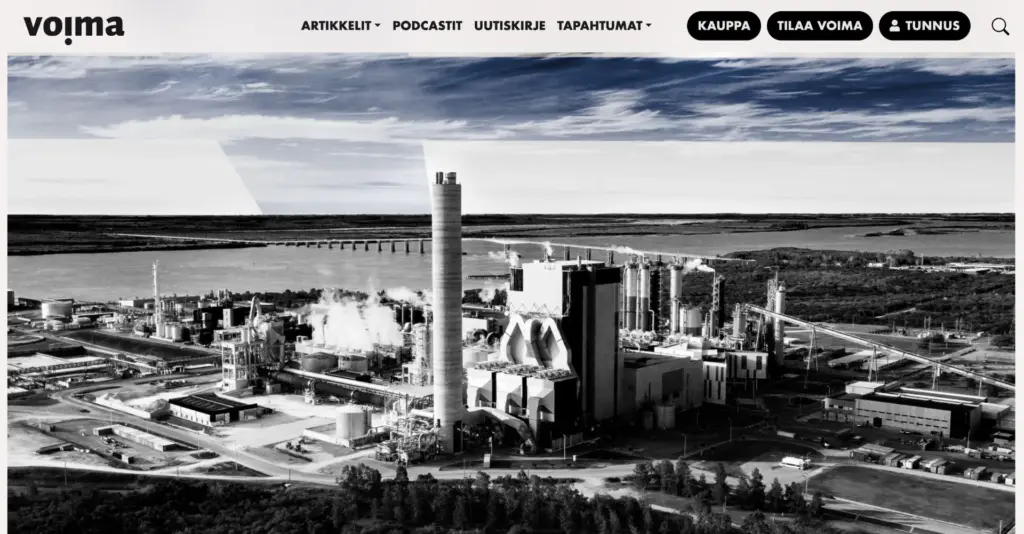
Since the 1990s, Uruguay has courted foreign investment by subsidising eucalyptus plantations on its vast pampa grasslands. Finnish forestry giant UPM is among the biggest beneficiaries of these non-native groves. But Uruguayan opinion is divided on whether the Finnish paper mills benefit their country at all.
In an article published by Voima, journalist Kukka-Maria Ahokas scrutinises UPM’s polarising encroachment on Uruguay, which is backed by the state but opposed by civil society groups.
Uruguay has been dubbed the “Switzerland of Latin America” for its political stability, making it an ideal investment target. Federico López-Terra, a Uruguayan professor at Swansea University in the UK, dismisses this comparison as a “national myth,” but concedes that the citizens of Uruguay do trust their state more than most. “In the neoliberal Americas, this is one of few countries where core institutions are still state-owned, though there is private competition. People trust the state will not scam them,” he said. Sounds a little like Finland, the journalist notes.
On the sunny pampa, eucalyptus grows ten times faster than the conifers that have fed the Finnish forestry industry for centuries. Eucalyptus is easy to pulp into cellulose, making it an ideal feedstock for paper. To sweeten the deal, Uruguay has created Free Trade Zones where companies are exempt from all national taxes.
It’s a no-brainer for UPM, which now owns two massive paper factories in Uruguay. But what’s in it for Uruguay?
“They are coming here to make money, but they’ll take better care of the environment than we do,” Uruguay’s then-president Pepe Mujica, a left-coded liberal, described UPM in 2014. Negotiations on the construction of a second massive cellulose factory were underway. Opinion polls showed 75 per cent of Uruguayans supported the deal, which went through.
The new factory opened in 2023, amid a severe drought. While Uruguayans struggled to access drinking water, UPM was provided an unlimited supply. A few weeks after its opening, the factory caused one of the largest industrial accidents in Uruguay’s history, discharging nearly one million litres of caustic soda that killed fish in a nearby river. UPM says it has cleaned up the pollution, but critics say the issues are systematic.
According to Raúl Viñas and Ana Filippini from environmental group Movus, the eucalyptus plantations are causing ongoing water scarcity. “Eucalyptus absorbs water from the subsoil year-round,” notes Viñas.
Viñas says UPM promised 10,000 new jobs in Uruguay, but has only created 1,200.
Regardless, Uruguayan media continues to praise UPM as an important investor in national growth.
Last winter, UPM closed down one of its four factories in Finland, and requested permission from Uruguay to increase production there. Despite opposition from Movus and other NGOs, the government announced the eucalyptus plantations will expand.
UPM denies any plans to close down more factories in Finland, but its domestic operations have shrunk rapidly. The underlying logic is clear: UPM’s factories in Uruguay were reaping profits last year, while its Finnish mills made losses.
Today, Finland is taking on the extractive role played by countless colonial and neo-colonial actors in Latin America. But the move from productive industry at home to extractive industry abroad is not good for workers on either side. The problem is not simply that jobs are moving from Finland to Uruguay. The net value created by these jobs is lower, because UPM doesn’t contribute to the local tax base.
From the Free Trade Zone in Uruguay, UPM’s products are mostly exported to China, while profits go to shareholders – including large pension funds – in Finland. Only pollution is left behind in Uruguay. This is the irony of extractive “investment” regimes everywhere.

The original article ‘Tehtaanpiipun varjossa – suomalaisten sellubisnes peitti Uruguayn ruoho-arot puuplantaaseilla’ was first published in Finnish by Kukka-Maria Ahokas for Voima on March 18, 2026.
Voima is a Finnish newspaper focused on culture and social issues.
Summary by Kaisa Saarinen