A small French media outlet is – and it turns out they have a lot to say
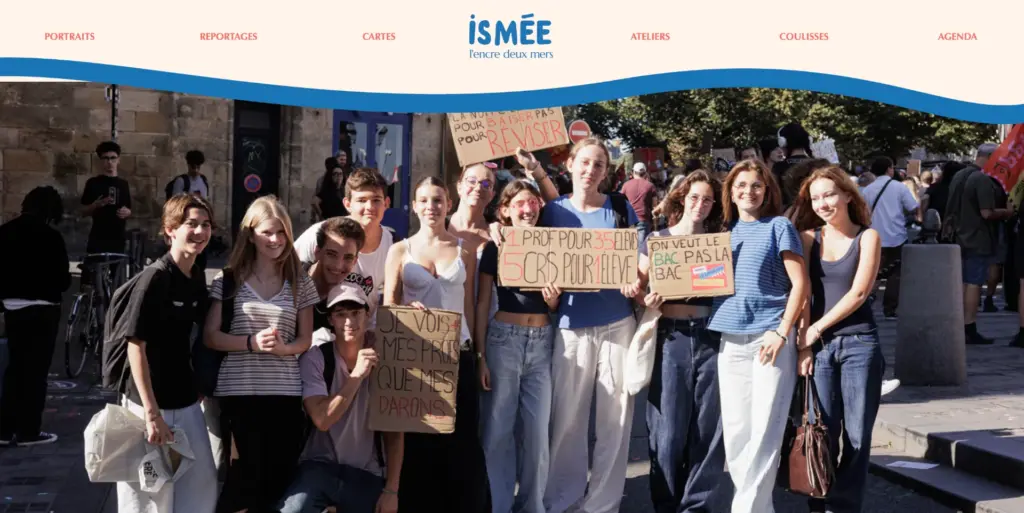
It’s been nearly a month since students across France have taken to the streets to protest underfunding in education, staff shortages and dilapidated schools. Images of vandalised buildings, angry teenagers with cardboard signs and police officers in riot gear have flooded both French and English media.
But a piece published in the local media outlet Ismée stands out because of the great lengths reporter Anne-Sophie Novel has taken to understand the students’ grievances – and their demands.
She visits several schools and speaks to students throughout the Bordeaux region, as well as their parents, grandparents, teachers and academics.
Much of the anger is rooted in the Parcoursup system – a pre-enrollment platform for students to apply to university.
“It turns students into robots, ranking them based on absences and grades. They don’t listen to what they have to say or their true desires,” said a student named Siam.
Their stress is compounded by long travel days for students in rural communities, long queues for school lunches, run-down buildings that can’t withstand the crippling heat waves, and some of the longest school days in Europe – up to 34 hours per week for some.
“Why is France among the countries with the highest number of class hours, yet declining results?” asks Nils, a first year student in Créon.
The students’ exhaustion and frustration is palpable – they say they feel ignored and disrespected by the authorities. According to a study of more than 3,000 young people, 78 per cent of them feel that their generation is less heard than previous generations and believe that political leaders are failing to adequately prepare for their future. Many are also considering building a life outside of France.
And yet, students from across the country have come together in solidarity, often joined by their parents, who are pictured holding signs that read things like “Kids can’t vote. I can. Grandmother in solidarity”. They have been met with tear gas and stun grenades, in scenes that have been described as a war zone. But Nils rejects the narrative that students are protesting because they have nothing better to do, insisting: “I have absolutely nothing to gain by missing my classes.”
The article also cites sociologist Vincent Tiberj, who says the excessive use of force against protesters is specific to France, despite other European countries practising de-escalation of policing. Over 6,000 arrests have been made since September 29. The piece also references an essay by journalist Salomé Saqué who analysed media discourse that often paints young people as individualistic, narcissistic and lazy, while disregarding the realities they face today including social insecurity, a housing crisis and the climate emergency.
“This movement comes from high school students, let’s take them seriously,” he told France 3 Nouvelle Aquitaine, a local public TV station.
The article also makes note of the government’s hapless response to the mass protests – including setting up an online platform set up to share their grievances, and dedicated time for students to interact with teachers.
“Decisions are made hastily with measures that cannot be implemented without resources,” said Vincent Gorse, headteacher of the Badinter high school in Créon. His union has since filed a demand for immediate negotiations with the education minister.
“We haven’t been heard for many years, and if the situation becomes uncontrollable, it’s precisely because, once again, we’re not listening to what’s happening on the ground,” said the union’s national secretary, Nicolas Bonnet.

Summarised by Translator‘s digital editor, Maxine Betteridge-Moes.
| Maxine’s take: I’m always in awe of the French people’s fearless approach to protest – something I’ve never witnessed as a student in Canada, or in the UK for that matter. But what really stood out to me with this piece was how Anne-Sophie Novel clearly took the time to interview so many students at length, and to really listen to their stories. (Full disclosure: Anne-Sophie and I were recently part of a journalism fellowship to practice ‘deep-listening’ – and boy, did she nail the assignment with this one). Her piece is a clear contrast to much of the mainstream media, which reverts to sensationalism, zeroing in on violent outliers, or reducing the teenagers’ demands to common tropes of laziness and attention-seeking. I could feel these young people’s frustrations, and I felt that, given the opportunity, they would have real, tangible suggestions to improve their educational lives. To me, this piece was a reminder of the value of local media, immersive journalism, and the possibilities for solutions to these problems – if we’re willing to listen. |
Original by Anne-Sophie Novel, ‘Gironde : des lycées ruraux aux cortèges de Bordeaux, la révolte d’une jeunesse « méprisée »‘ published in French by Ismée on October 7, 2026.
Founded in 2025, Ismée is a local independent media outlet in south-western France that publishes in-depth journalism in print and online to build bridges and facilitate open dialogue.