A fragrant flower worn at weddings, sold in city streets, and celebrated in song is becoming another casualty of Yemen’s overlapping crises
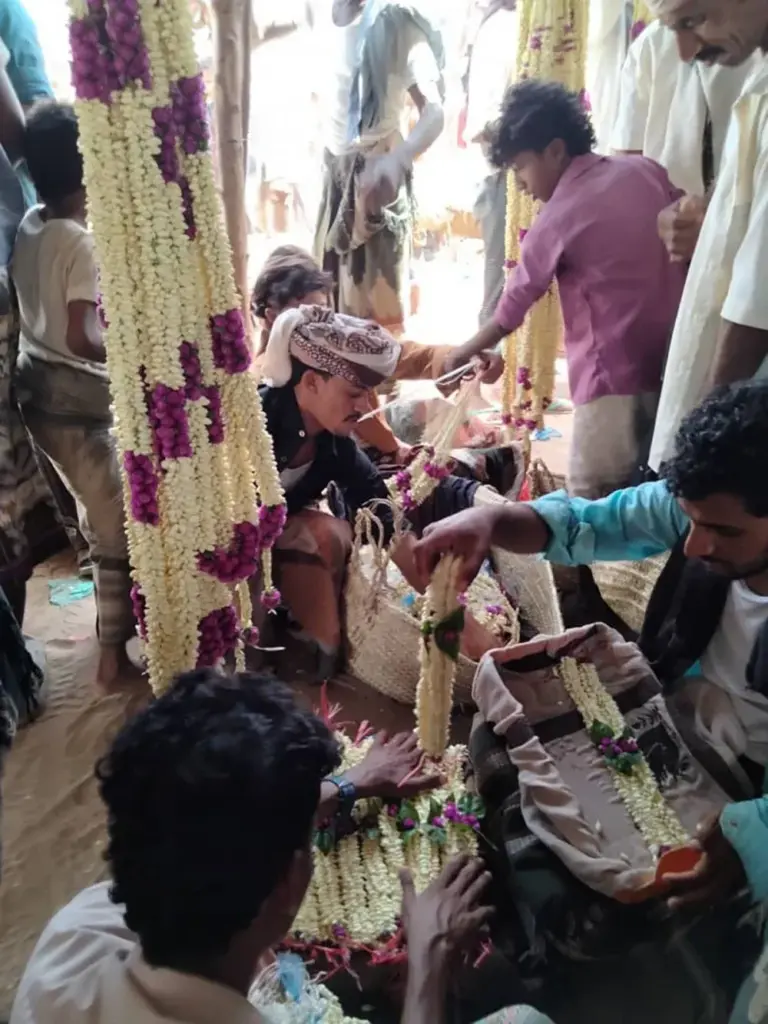
Across Yemen, Arabian jasmine (Jasminum sambac) is more than a flower. Worn as garlands at weddings and celebrations, used as a natural perfume, woven into traditional cosmetics and praised in poetry and song, it’s deeply embedded in the country’s culture. It also supports thousands of livelihoods, from farmers and harvesters to the women who spend hours threading its delicate white blossoms into intricate floral arrangements.
In a feature for Raseef22, Yemeni journalist Alaa Al-Din Al-Shallali explores how this centuries-old tradition is coming under pressure from two forces that increasingly shape life in Yemen: war and climate change.
The story begins in Tihamah, on Yemen’s western coastal plain, where much of the country’s Arabian jasmine is grown. In recent years, unusually heavy rainfall has caused devastating floods that swept away farms, irrigation systems and crops that took years to cultivate. Farmers interviewed by Al-Shallali describe the floods as unlike anything they have witnessed in decades.
Kadaf Kashah spent two years tending his jasmine fields before floods destroyed both the crop and the solar-powered irrigation system that sustained it. He tells Raseef22 that neither government authorities nor humanitarian organisations came to the farmers’ aid, leaving many to confront mounting debts, bankruptcy and the prospect of poverty on their own.
But the report argues that extreme weather is only part of the story. Yemen’s civil war has fundamentally reshaped the jasmine trade. Export routes to Saudi Arabia, once the largest market for Yemeni Arabian jasmine, have been severed, fuel prices have soared, and transport has become increasingly difficult. At the same time, urban expansion has swallowed agricultural land, while growers and traders earn far less than they did before the conflict.
Women are also disproportionately impacted. Those who have long earned a living harvesting flowers and weaving them into garlands have also seen their incomes collapse as production declines. One widow, who supports her orphaned children through this work, struggles to speak about losing her only source of income. Meanwhile, shop owners in the capital Sana’a say they have begun selling roses instead of Arabian jasmine simply to keep their businesses open.
The report also cites a rare admission by agricultural officials, who acknowledge that Arabian jasmine has long been neglected despite its economic and cultural importance. Researchers and officials interviewed by Al-Shallali call for stronger farmer cooperatives, modern irrigation techniques, and greater investment in aromatic plants that have received little institutional attention.
Rather than treating Arabian jasmine as a niche agricultural crop, Al-Shallali presents it as a symbol of a much broader crisis. As conflict and climate change converge, Yemen is losing not just its harvests, but its cultural identity and traditions.
The original article ‘الحرب-وتغير-المناخ-يهددان-زراعة-الفل-وتجارته-في-اليمن’ was first published in Arabic by Alaa Al-Din Al-Shallali for Raseef22 on February 10, 2026.
Raseef22 is an independent digital media platform based in Lebanon.
Summary by Cendrella Azar