Experts warn of a “museumification” of Uyghur culture, driven by the forced disappearance of its leaders
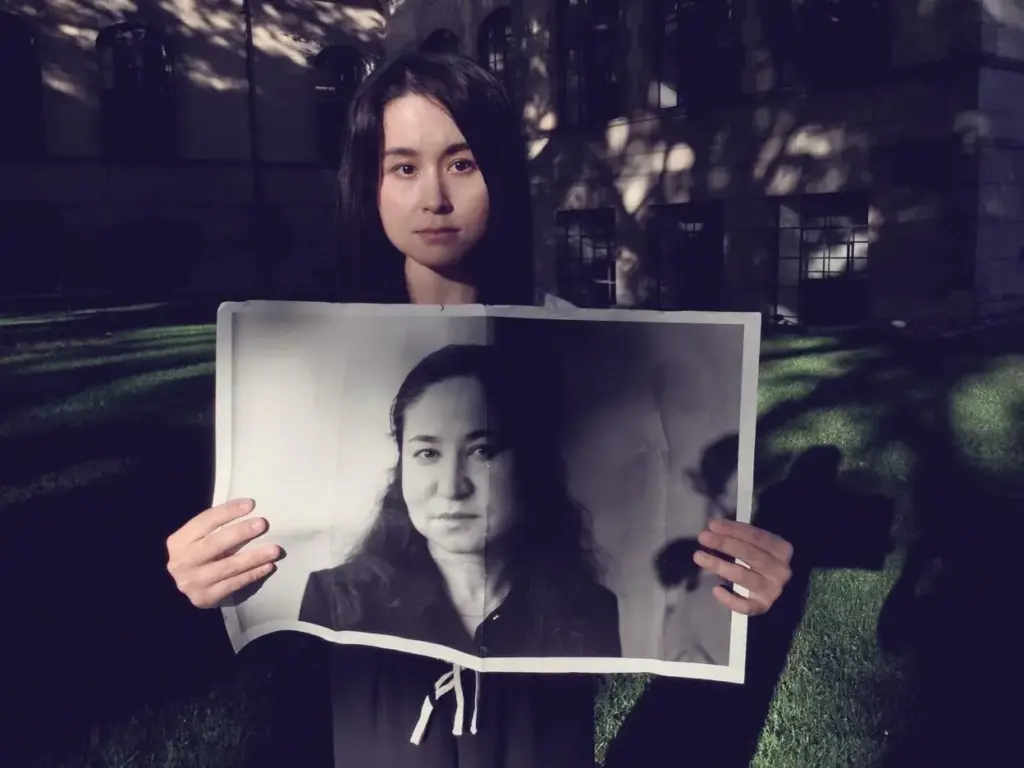
Rahile Dawut is one of hundreds of Uyghur scholars that have been arrested and disappeared by the Chinese government between 2016 and 2018. An anthropologist and professor of folklore at Xinjiang University, Dawut studied the significance of tombs of Islamic saints, known as “mazar,” in the daily life of Uyghurs, a Turkic-speaking, Muslim ethnic group native to Xinjiang in northwest China. Dawut disappeared in 2017, and six years later the human rights group Dialogue Foundation revealed that she’d been sentenced to life in prison for “endangering national security.”
For years, the Chinese government has been pursuing a massive campaign of forced assimilation and detention against Uyghurs.
Dawut’s story is retold along with those of various other disappeared intellectuals in a piece from the independent Mandarin Chinese-language publication Women我们. It reveals how Uyghur cultural and religious spaces are being systematically dismantled as part of Chinese president Xi Jinping’s pursuit of “great unity among all ethnic groups.”
According to the article, “a mazar usually refers to the burial place of a saint or a place where miracles are believed to have occurred”. It adds that “Uyghur pilgrimage practices in mazars include reciting the Quran, praying, offering sacrifices, cooking and sharing food […] cockfighting, gambling, and meeting potential partners.” Dawut’s research focused on how local traditions associated with the mazar have been preserved and reshaped over time.
Her daughter, Akida Polat, described her mother as “cautious” with a strong “survival instinct.” Other interviewees cited in the piece say that Dawut’s research sought to document culture and was not “radical,” as the Chinese authorities would suggest.
And yet, since 2017, over 100 Uyghur mazar have been destroyed, including the famous 450-year-old Imam Je’firi Sadiq mazar in the Hotan prefecture in southern Xinjiang. In 2019, the Uyghur cemetery in the city of Hetian was also taken apart for the sake of “urban development” and “freeing up more spaces.”
The article highlights arbitrary and obscure arrests of other Uyghur intellectuals, including The List of Persecuted Uyghur Intellectuals which includes the names of 124 Uyghur scholars, and four who are of Kirgiz and Uzbek ethnicities (the list has not been updated since November 2018). Another list by Abduweli Ayup, a Uyghur scholar in exile, documents 435 intellectuals detained since 2016. Many of them are writers, poets, journalists, doctors, and engineers, with sentences ranging from a decade in prison to the death penalty.
Women我们 also cites reporting from Radio Free Asia that Xinjiang Normal University built a specific detention centre for the arrested Uyghur scholars, where they were kept for extended periods without their family’s knowledge.
But the crackdown extends beyond Uyghurs. Feng Siyu, one of Dawut’s students who is of the dominant Han ethnicity, was arrested in 2018 and sentenced to 15 years in prison, on the same charge as their professor. The Council on Foreign Affairs reported last October that over one million Uyghurs have been detained in the Xinjiang region since 2017.
On 1 July, the Chinese government’s new law promoting “ethnic unity and progress” came into effect. It emphasises a unified Chinese nation that priorities Mandarin Chinese in education and public administration. This law will undoubtedly mean further repression of Uyghurs, yet detailed reporting will be hard to come by due to the Chinese government’s strict media censorship. Uyghurs living abroad also face threats and intimidation for speaking out.
Today, Uyghur culture has been largely hollowed out, according to the article. Scholar Rian Thum describes this process as “museumification,” whereby culture is uprooted from its social and historical foundations, and the connections between people, their land, and their history are severed. What remains are cultural artefacts, from architecture to performances – beautiful on the outside, but primarily presented for tourists, void of their deeper meaning and significance.
For Dawut’s daughter, this reinforces the need to resist Uyghur erasure. In a commemorative piece published last year and cited in the article, she writes:
“[My mother’s] disappearance forced me to confront responsibility in ways I never imagined. I had never been involved in politics before. My mother’s disappearance forced me to stand up and speak out for human rights. Advocating for human rights is not easy, especially living alone in a foreign country while struggling to build a life. I must persevere until she is released, until her voice – and the voices of others like her – are heard again.”
The original article ‘热依拉·达吾提永远失去了她的田野’ was first published in Mandarin Chinese in Women我们 on March 16, 2026.
Women我们 is “an imagined community” that writes about contemporary history in uncensored Chinese on Substack.
Summary by Avery An (not her real name).