Publication Name: Revista LATE (Pron: Re-VIS-ta Latte)
Founded: 2017
Format: Print and online
Region: Latin America
Languages: Spanish
As featured in: The forthcoming print issue of Translator – available in September!
Nearly a decade ago, a team of journalists from six Latin American countries created an independent, non-profit publication devoted to a new kind of media for their region.
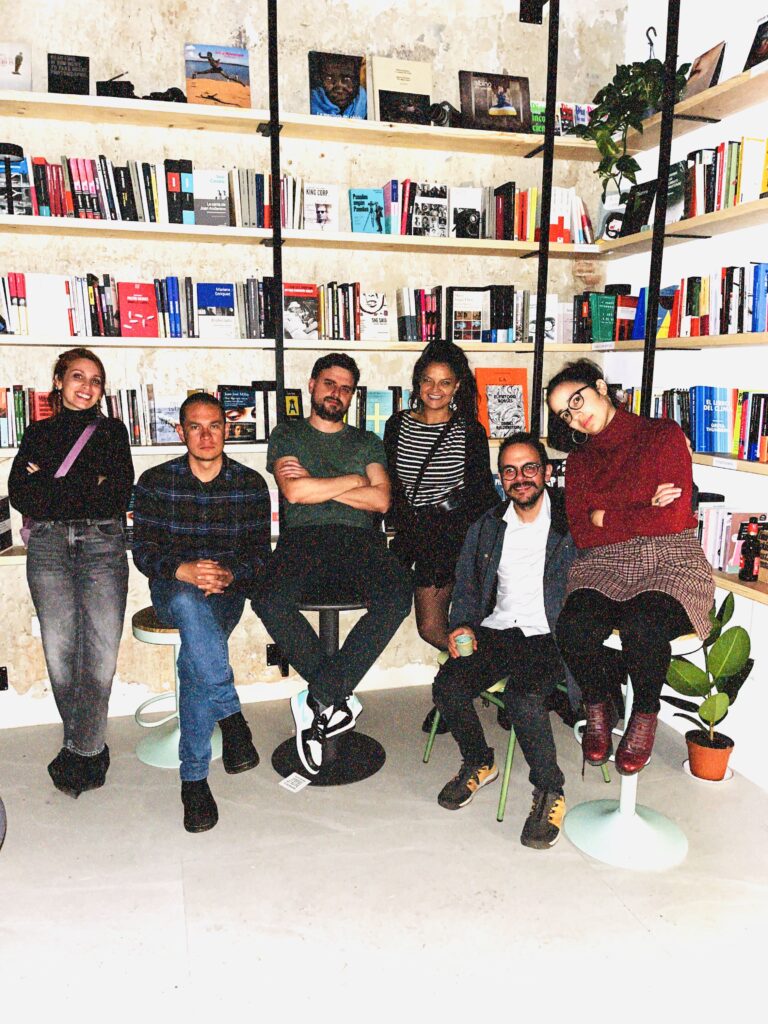
The Revista LATE team in Madrid
“The first motivation was not about the coverage of Latin American issues, but mainly the international coverage from Latin America,” says Argentinian co-founder and editor Daniel Wizenberg. “We wanted to improve the conditions for Latin American journalists to cover international issues mainly, but also to cover our region as well.”
A recent study from the Reuters Institute shows that several countries in Latin America are full of “news deserts”, meaning the conditions for practicing and distributing high quality, independent journalism are poor. It’s a dynamic that isn’t unique to Latin America – but the study notes that it’s made worse by “sponsored content, advertorials, and public funding that, in many cases, involve asymmetrical relationships with actors wielding political or economic power.”
Revista LATE launched in March 2017 in Bogotá, Colombia. It mainly covers corruption, organised crime, environmental issues and human rights abuses, often through cross-border investigations. It’s also a network to help connect, educate, train and platform Latin American journalists through its School of Reporters, which equips students for reporting on international stories in collaboration with newsrooms globally.
“Many great Latin American journalists are working more as fixers than collaborators with journalists from the Global North media outlets,” explains Wizenberg. “Journalists from Europe or from the United States should go to Latin America and work with Latin American journalists – and not have Latin American journalist working for them. That’s one of the things we wanted to change.”
The name of the publication literally translates to “arriving late”, but Wizenberg explains that late or latido in Spanish also means “heartbeat”. They cover stories that are often ignored by other media outlets in the region.
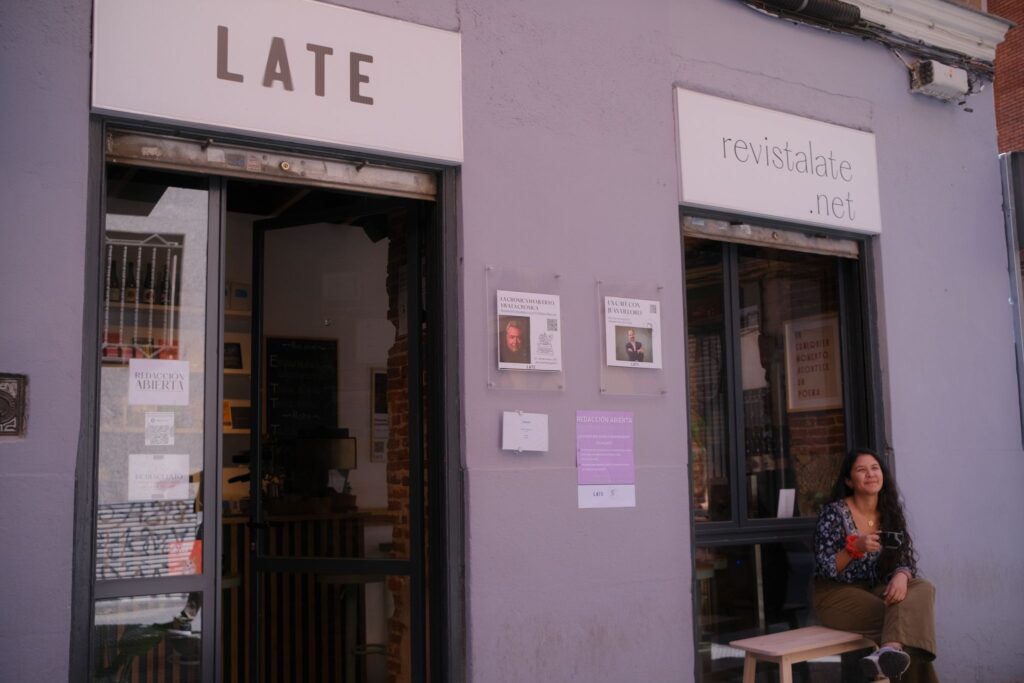
Last year, Revista LATE launched a print magazine and has just published its fourth issue. They’ve also opened an office and events space in Madrid, where Wizenberg now lives.
Photo: Sou Harris
A recent study shows that just 0.3 per cent of development money from donor countries goes to journalism, and no Latin American country is among the top 10 recipients. Wizenberg explains that this was a strategic decision to access more funding and opportunities for membership revenue, but that the rest of the team, including its editor in chief, graphics editor and podcast editor all reside in Latin America.
Revista LATE often collaborates with other Spanish and European outlets. They use creative means to distribute their journalism, including through theatre productions, live podcasts and more.
“Journalists will survive based on these new formats that we can find to publish,” says Wizenberg, adding that Latin American journalists also take a different approach to research and gathering information.
“The Latin American approach when going to the field, for example, to Africa or to Asia … I find it more personal than the European approach. Usually, we try to spend more time in the field. Our way of working is not doing that many interviews, but sharing time with our sources, building trust.”
This is evident in a feature by Colombian journalist and editor G Jaramillo Rojas about the Sahrawi refugee camps in southwest Algeria, which is being translated into English for the forthcoming print issue of Translator.
“Everyone who comes here is from Europe, few like you from so far away,” says one of the local Sahrawi authorities, upon Rojas’ arrival in the camps. The piece is a window into the lives of Sahrawi refugees who have been living in forced exile from their homeland of Western Sahara for more than half a century.
“At the end of the day, if journalism is well done, it doesn’t matter where you’re from,” says Wizenberg. “It’s about creating more spaces for Latin American journalists to have the chance to improve their abilities and the possibilities of doing this work.”
We asked Wizenberg to curate a selection of stories from Revista LATE:
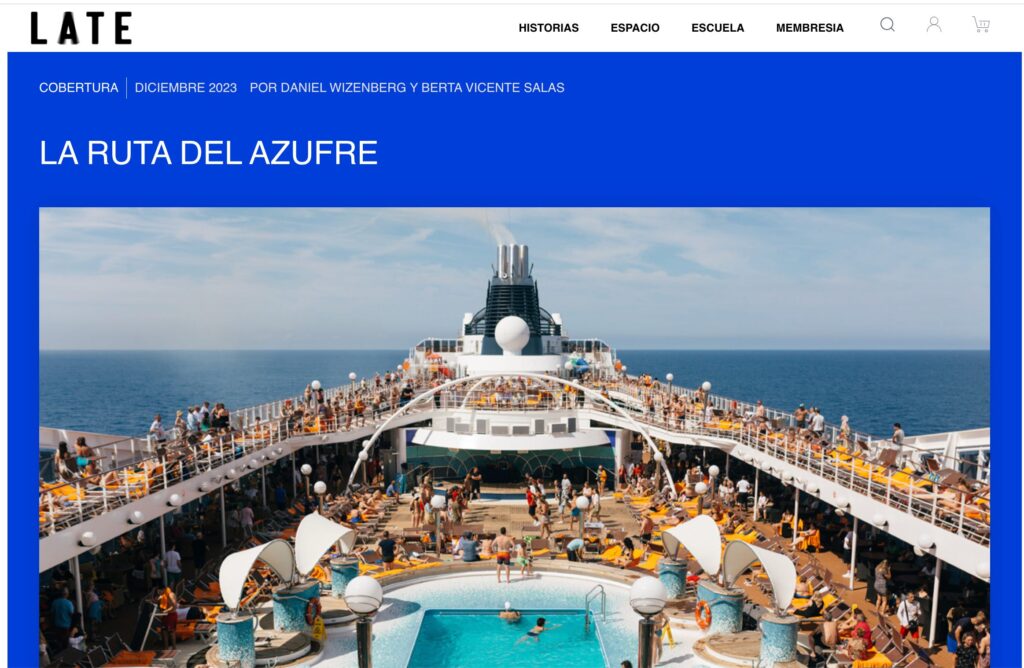
‘La ruta del azufre’ (‘The sulphur route’) by Daniel Wizenberg and Berta Vicente Salas
This piece traces the environmental footprint of global shipping, from cruise pollution in the Mediterranean to iron ore exports through the Canadian Arctic. Combining field reporting, data analysis and visual storytelling, it reveals how maritime trade links distant ecosystems while exposing coastal and Indigenous communities to pollution and noise – all the while accelerating climate change.
I chose this piece because it best reflects Revista Late‘s editorial approach: connecting local realities across continents through cross-border reporting, while combining rigorous investigation with narrative storytelling that continue to generate impact well beyond publication, for instance through theatre, festivals and civil society actions.
Daniel Wizenberg
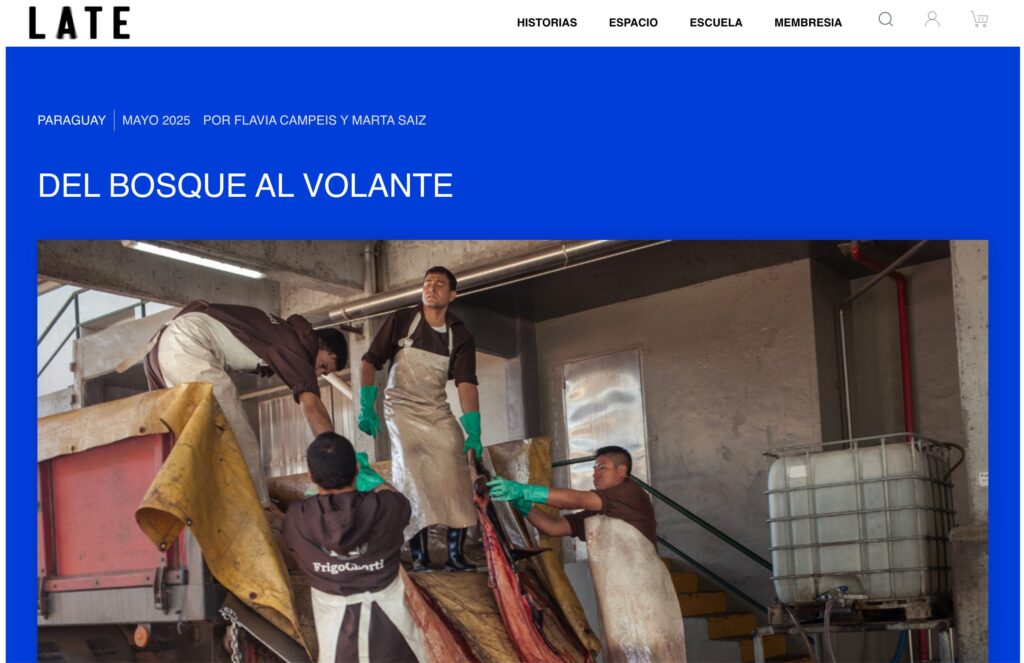
Del bosque al volante (‘From the Forest to the Steering Wheel’) by Flavia Campeis and Marta Saiz
This story follows the journey of leather from Paraguay’s Gran Chaco to Europe’s luxury car industry. Reporting across South America and Europe, it examines how Italian tanneries supplying major automotive brands remain connected to one of the world’s fastest-deforesting regions – despite corporate commitments to sustainability.
This piece illustrates our approach to following global supply chains across borders and connecting environmental destruction with everyday consumer products in the Global North.
Daniel Wizenberg
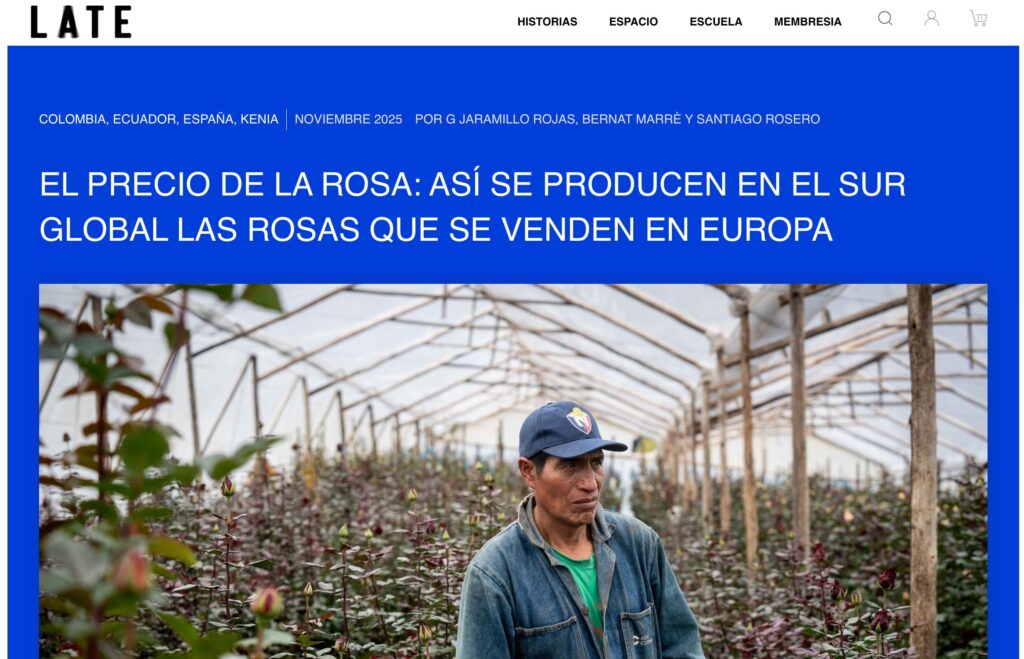
El precio de la rosa (‘The price of roses’) by G Jaramillo Rojas, Bernat Marrè and Santiago Rosero
Roses grown on farms in Kenya and Ethiopia are sent to florists across Europe, where they are sold in bouquets for a range of celebrations. Through on-the-ground reporting, this piece explores the environmental, economic and human costs behind one of Europe’s most symbolic consumer products, revealing the unequal relationships that sustain the global flower trade.
This investigation shows how journalism can uncover the hidden stories behind ordinary objects, connecting producers and consumers through deeply human reporting.