In a fiercely divided city, language remains a bitter sectarian battleground
Belfast’s transit terminal has a new look: a sleek cavernous steel and glass building. It’s an international style familiar to anyone who has passed through an airport or train station built in the last decade. The only hint of its status as the second busiest station on the island of Ireland is a small canvas sign tucked into the corner announcing ‘Fáilte’ (‘Welcome’ in Irish), alongside 10 other translations of the word.
Loyalist in this context, means loyal to Northern Ireland as part of the United Kingdom. It largely maps onto support for Unionist parties (those in favour of the continued union between Northern Ireland and Great Britain) and is often associated with Protestantism, though these alignments are increasingly breaking down.

Nationalist means supportive of the unification of the island of Ireland, historically often associated with Catholicism, and use of the Irish language. Republicanism is a political movement centred around the eventual aim of unity with the southern Republic of Ireland, as against the British United Kingdom.
So it came as a surprise when in March of this year Northern Ireland’s Minister for Infrastructure announced a £150,000 grant to ensure all the station’s signage is in both Irish and English. A week later, Jamie Bryson, an outspoken Loyalist activist and lawyer, filed a legal complaint arguing that it breached the 1998 Good Friday Agreement, which requires that certain “key decisions” must pass through a legislative majority from both Nationalist and Unionist parties.
Belfast has some of the more progressive bilingual signage zoning policies in Northern Ireland. Only 15 percent of residents on a given street need to request bilingual street signs for the city to pay for and erect them. Local Irish speakers have reacted to the policy with enthusiasm, mobilising to install Irish signage on over 750 streets. Yet given that most Unionist communities reject Irish as the language of Republicanism, few Unionist neighbourhoods opt to put them up, leaving Irish largely confined to Republican areas.
In what remains a deeply sectarian city, these signs join flags and murals as easily identifiable omnipresent psychological and cultural borders. When neighbourhood signs read both ‘Street’ and ‘Sráid’, you’ll know it’s Republican. Public infrastructure reinforces these divisions: if you take the bus that runs from West to East Belfast, you’ll notice that announcements in Irish abruptly stop as the bus turns from the Falls Road into the city centre. For Irish language speakers in Belfast, recognition can be rare and consequential. A friend of mine told me that his young bilingual daughter asked why speaking Irish wasn’t welcome in the city centre on a crosstown bus journey as the announcements made the switch.
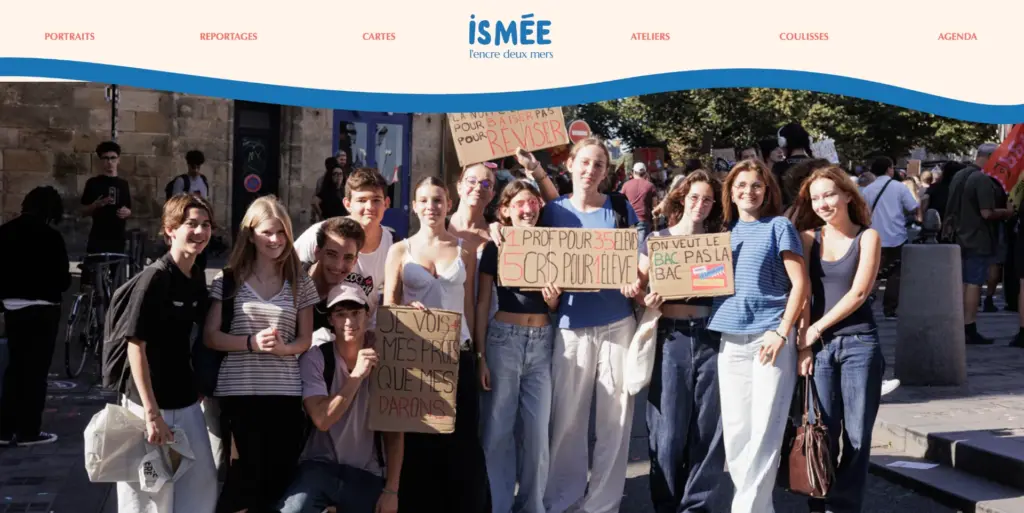
During a recent commute I ran across a scattered group of protesters claiming the new bilingual signage represented an encroachment of Irish values into shared spaces. “Irish is a threat,” the protesters repeated.
In a sense it is a threat. It is not a threat to the Protestants neighbouring the station. The threat is to a political system in which both major parties define themselves in opposition to one another. They profit from the theatre generated by sectarian cultural conflict. If the signage is introduced, the trains will still run on time, and the lack of cycle parking will continue to bother commuters.
But Irish will finally exist in a public space in Belfast, allowing Unionist commuters to gain access, even in passing, to a linguistic heritage previously denied to them. Those travelling to Belfast by train or bus would be met with a Fáilte, this time etched into the building. A permanent Fáilte which would reintegrate Irish into the city once known to its residents by its Irish name, Béal Feirste.