Ingredients in a school lunch programme for kids are sowing divisions along caste and religious lines
Many kids in India are being served a messy side of religion, caste, and ideology with their school lunch.
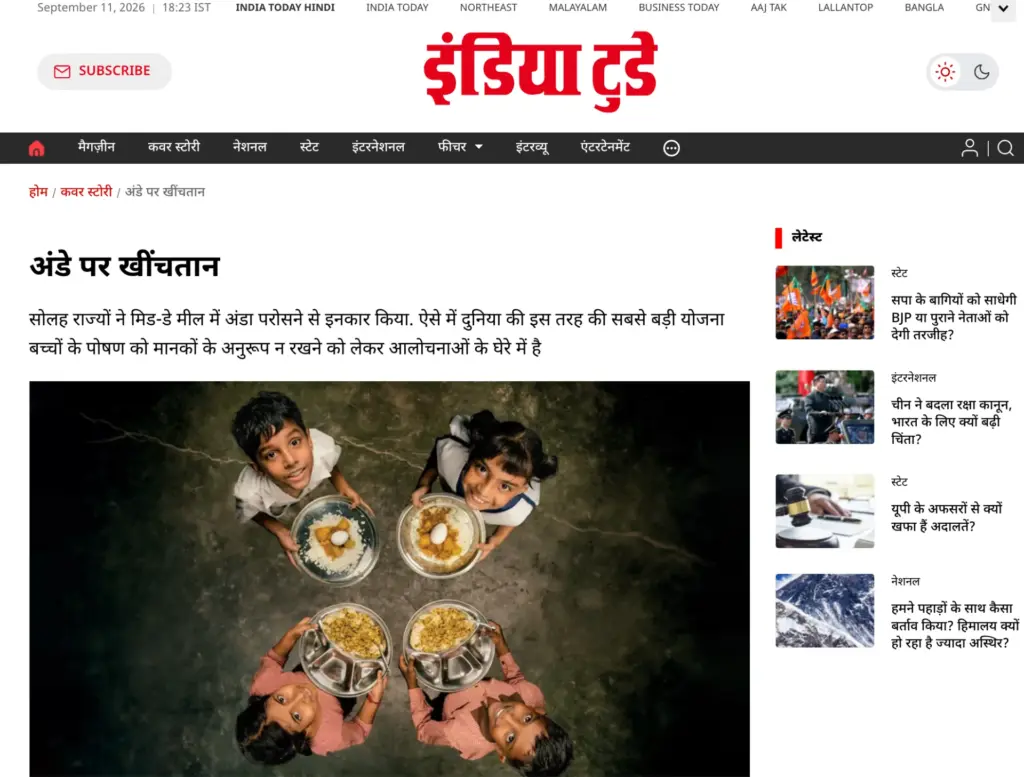
A Hindi piece by Sonali Acharjee in India Today explores how the growing use of centralised vegetarian meal providers is influencing regional eating practices, government finances and supply chains.
PM POSHAN (the government scheme formerly known as the Mid-Day Meal) is the world’s largest school meal programme, feeding around 112 million children in over one million schools across India. While the Union government of India establishes the calorie and protein requirements for each child and subsidises grain and cooking costs, states determine what actually goes on the plate – and herein lies the controversy.
When the new BJP government came to power in West Bengal in May, it announced that meals for roughly 1,800 schools in Kolkata would be prepared by the ISKCON (or Hare Krishna)-affiliated Annamrita Foundation. Because ISKCON follows a strict vegetarian food code, eggs would have been replaced with foods such as soy, paneer, rajma and pulses. The decision was eventually rolled back after public outcry and pushback from parents and opposition party members. In the end, the government compromised: ISKCON would provide the vegetarian meal, while self-help groups would separately supply eggs.
Elsewhere in the country, only 16 of 28 states and four of eight Union Territories regularly include eggs in PM POSHAN or supplementary state-funded school meals, and the divide isn’t determined by which states are ruled by the BJP.
Writer Shahu Patole, author of Dalit Kitchens of Marathwada, explicitly interprets the exclusion of eggs as caste politics. Fish, meat and eggs are ordinary parts of Bengali food culture, and indeed several other food cultures in India apart from the dominant Hindu castes that practise vegetarianism. Meanwhile, children who attend government-run schools disproportionately come from poorer Dalit, Adivasi and other caste communities, where eggs are an ordinary and necessary part of their diet. Patole asks: why should dominant vegetarian dietary norms determine what those children eat?
For children from poorer families, free meals serve as a major incentive for attending school, and eggs provide a major source of much-needed nutrition. The reporter speaks to 13-year-old Payal Kumari who lives in Ranchi, the East-Indian state my own father grew up in. Kumari says she waits eagerly for Mondays and Fridays because those are the days when she can eat an egg at school. At home, her family can only afford to eat eggs on Sundays.
In two states in Western India, successive governments, irrespective of party, have never served eggs. Rajasthan has strong vegetarian traditions among Jain, Vaishnav, Bishnoi and other Hindu communities, in which some families object not merely to their children eating eggs but even to food being prepared or served using utensils that have touched them. The government here also cites practical problems such as storage, breakage and spoilage in extreme heat. These are real issues, but so is nutrition.
In neighbouring Gujarat, the birthplace of prime minister Narendra Modi, eggs are never included in school meals. Acharjee’s report cites a National Family Health Survey that shows more than a third of children under five in the state are stunted, and just under eight per cent of infants receive adequate nutrition. While the lack of eggs in school meals is not the cause of the problem, it could well be a solution for nutritional inadequacy.
One egg provides roughly 6–7g of high-biological-value protein, all nine essential amino acids, plus B12, vitamin D, choline, selenium and fat. Children can obtain adequate nutrition without eggs through milk, paneer, pulses, chickpeas, rajma, soy, nuts, seeds and combinations of grains and pulses, but replacing an egg nutritionally requires more logistical energy: planning, sourcing sufficient quantities of food, diversity of diet, reliable procurement and monitoring. Vegetarian food can and does nourish children, but can a cash-strapped state school system reliably provide vegetarian substitutes with equivalent nutritional value? Or is a vegetarian alternative to eggs simply a respectable-sounding justification for simply providing poorer children with less?

The original article ‘अंडे पर खींचतान’ was first published in Hindi by Sonali Acharjee for India Today on August 17, 2026.
India Today is the most widely circulated weekly news magazine in India.
Summary by contributing editor Nishita Jha.
Nishita’s take: To those unfamiliar with Indian politics, a cover story about eating eggs at school might seem strange. But as I see it, there are three major reasons this story deserves more attention: for one, child malnutrition rates remain critical in India, with widespread stunting, wasting, and undernourishment recorded across the country.
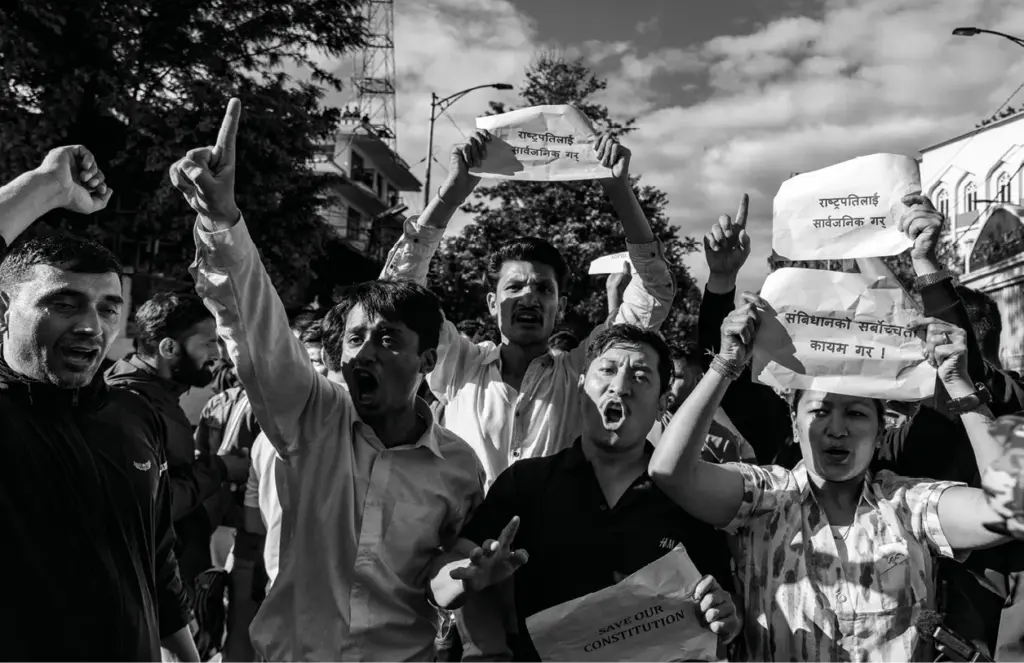
Second, India’s schools and colleges are increasingly becoming sites of protest against governmental policies and failures. Following the nationwide protests that forced the resignation of India’s education minister a month ago, schoolchildren have now begun to protest against the lack of facilities (like walls, blackboards and teachers) as well as basic amenities like bathrooms in government-run schools.
Finally, as anyone who has lived in the country will tell you, Indian vegetarian food is delicious, but Indian vegetarians can be vicious. The question of who eats meat and eggs is frequently coded along caste and religious lines, and often decides who you marry, whether you get to rent a home or not and in recent years, whether you are publicly lynched on suspicion of eating beef. As long as this remains true, children’s school diets will remain a highly divisive issue.