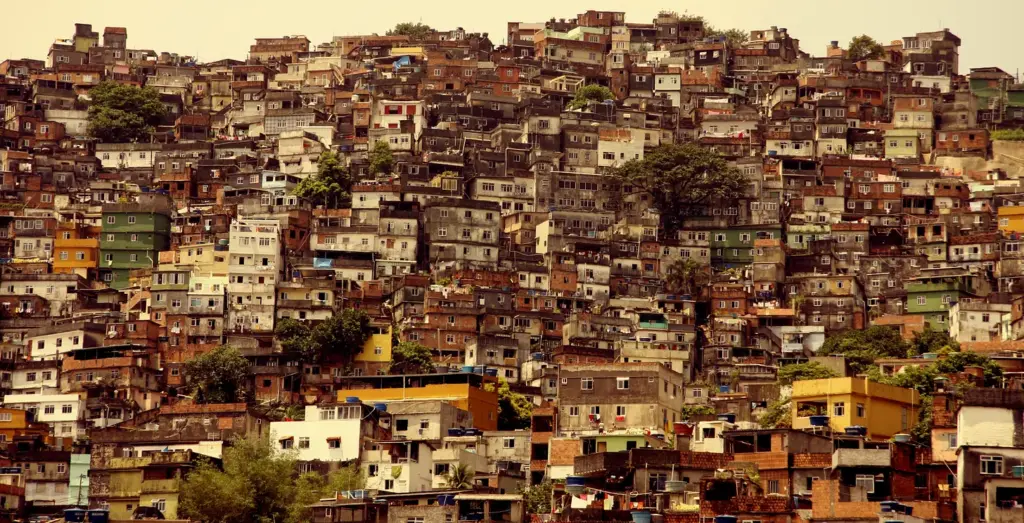
In Santa Tere, gentrification looms threatening one of the city’s last traditional neighbourhoods
I moved to Guadalajara in 2013, and to the neighbourhood of Santa Tere a year later. After nine years living in the US, I was surprised that here, everyone seemed to know each other. Then there was the homemade food: no McDonald’s in this neighbourhood, just fondas or small kitchens selling tamales, barbacoa tacos, and jericallas—a scene that today sits beside Airbnbs, the constant arrival of foreigners and small cafés moving in.
Fondas Small, informal eateries in Mexico, usually family-run, offering home-style cooking at affordable prices.
Barbacoa A slow-cooked meat dish in Mexican cuisine.
Jericallas A custard-like dessert from Guadalajara, Mexico, similar to flan but with a slightly firmer texture and a caramelised top.
Early in the morning and late at night, I would walk back through dark streets and suddenly come across a bright corner with 30 people gathered around a taco cart with loud music. Life in Santa Tere is like a kaleidoscope: horns, music, laughter, colours everywhere. I know it well: I owned a café here myself for three years.
One of our regulars was Emilio. He sold artisan clothing made by Indigenous women from his living room and online. A professional dancer, slim, with dreadlocks, he spoke calmly while looking you in the eye. He told us he was from “another planet” (like so many people these days), but he had fallen in love with Santa Tere.
“I love the family feeling here,” he would say, “and how at 10 at night you can still hear children playing in the street. It feels safe here. Everyone knows each other. I love my neighbours.”
Some time later his landlord called him and he came to the café. “I have three months to move,” Emilio told us. “They’re going to demolish the house and build apartments to rent to foreigners.” The house was old, with many rooms, inner courtyards and a terrace. Today, a container full of rubble sits at the door.
Emilio found another place across town and moved on. By then, digital nomads were already regulars at the café, laptops open beside mugs of Mexican hot chocolate and pan de muerto. His story wasn’t unusual—behind each move was a landlord doing the math or with no real choice but to join the transformation. I began to see it up close, in my own house.
Pan de muerto
A sweet, round bread traditionally baked in Mexico for Día de los Muertos (Day of the Dead).
Emilio’s case makes me think of a conversation I had with my landlord. His name is Fernando, and his wife Sonia had a baby girl a year ago. Back in 2014, I rented a studio from Gema, Sonia’s sister, and thanks to her I ended up here. That’s how things used to be in Santa Tere: you rented to people you knew or to someone who came recommended.
“You have to adapt, there’s no other way,” Fernando told me. “I was hesitant at first, but expenses went up a lot with the baby, and my parents are getting old. Plus, my mom has dementia, and Sonia is still recovering from postpartum depression.”
Fernando’s family, like Gema’s and Sonia’s, has always owned houses in Santa Tere. Today there are three left: ours, theirs and another one he just finished remodelling.
“There’s a lot of demand from foreigners like you,” he said. “Most are Americans and Canadians, and they come with dollars. At home, we remodelled half the place and squeezed in with my parents, so we could rent the other half. I divided the new house into two and rent it out as duplexes on Airbnb or to people I know, like you. The gringos don’t mind what we charge—they’ve got dollars.”
“Don’t raise our rent, please,” I joked. Fernando patted me on the arm. He’s a good-natured guy, short, with a boyish face. His daughter looks like him.
When I was living at Gema’s place, I met her father, Carlos. He’s 70 now and still works in his mechanic’s shop, on the ground floor of one of his houses, now managed by Gema.
Everyone in the neighbourhood knows Carlos. He has the energy of a 20-year-old and works seven days a week. One day he told me how different the neighbourhood was 50 years ago:
“Across Américas (an avenue to the west) there were sugarcane fields and waterfalls. Going that way,” he said, pointing with his grease-stained hand, “was like going camping. We would swim, steal fruit and play. None of what you see here existed, just a few adobe houses. The city was around the Cathedral; this was the outskirts.”
Carlos’s house holds three generations, something very common in old Santa Tere families. I asked him about the foreigners, if he was worried the neighborhood was filling up with them.
“I’m not worried about the gabachos,” he said. “They’ve always been here, and they always will be. Besides, they bring dollars, and we have houses and land that will only keep rising in value.”
Gabachos
A colloquial Mexican Spanish term that can mean ‘Americans’ or ‘foreigners’ more broadly.
It’s true, prices have jumped in the last five years. Some people at the café used to say it would all burst, like the 2008 housing bubble in the States.
Today, the waterfalls are buried beneath the Financial District of Guadalajara. Nothing remains of the fields, and the rivers are paved over.
Santa Tere still smells of homemade food, but the voices on the street have changed, English is rising alongside Spanish. It’s one of the last traditional neighbourhoods in Guadalajara, a place of resistance and reshaping, still dancing to Mexican music and glowing with taco stands at midnight, even as the ceaseless currents of change run through it, like the waters beneath.