How personal darkness becomes a theory of class, race and aesthetic rebellion
In this reflective essay for Mexican publication Revista de la Universidad, Dahlia de la Cerda traces her journey from the working-class barrio that raised her to the rarefied cultural spaces that demanded she shed her origins. At its core, the piece is about the collision between lived darkness and aestheticised darkness but also between the violence of poverty and the violence of being told that poverty must never show. Through a blend of memoir, theory, and political analysis, de la Cerda rebuilds a Mexican Gothic rooted not in European fantasy but in the structural realities of classed and racialised life.
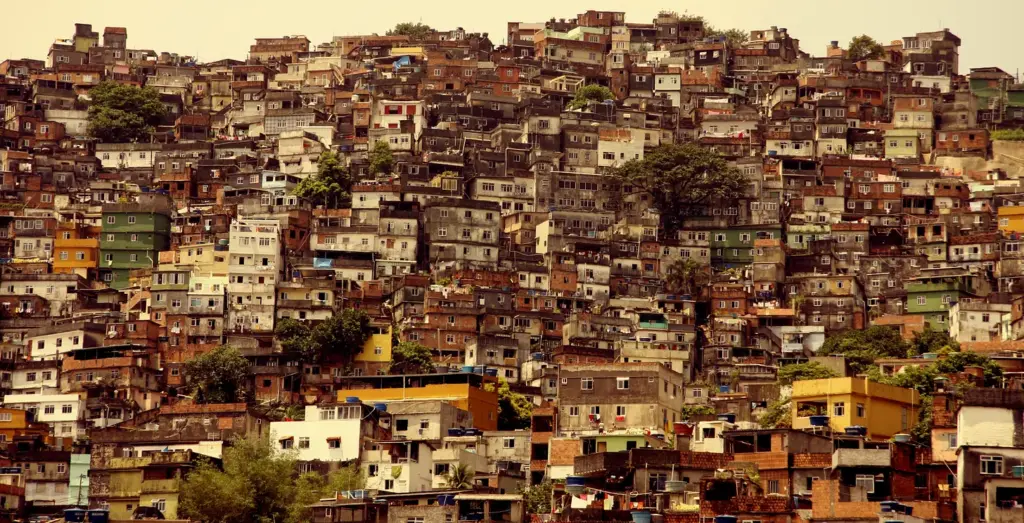
She begins with the world of her childhood: her mother’s bar, thick with cigarette smoke and cumbia; neighbourhood women who heal with rituals; the sense of closeness that comes from living among people who share the same vulnerabilities. It is a place marked by scarcity and by the state’s absence like the electricity that cuts, police who only appear as threat, schools that discipline more than they educate but it is also a place structured by collective care. De la Cerda names this environment “darkness,” but not as metaphor. It is a material condition shaped by political neglect and economic dispossession.
The rupture arrives when she enters a private school, an institution that functions less as a pathway to education than as a factory for middle-class aspiration. Here, she confronts the disciplinary gaze of whiteness: her accent, her family’s work, even her smell are policed as signs of inferiority. It seems that shame becomes internalised policy for her. When she discovers the goth subculture, she sees in it the possibility of transcendence, a way to access a kind of aesthetic capital that seems to grant immunity from class contempt.
But as she immerses herself in the goth scene, she realises how deeply its aesthetics echo the colonial imagination. European darkness is presented through pale faces, Victorian melancholy, an obsession with death detached from material suffering becomes the standard against which all else is measured. De la Cerda begins to understand her participation in this aesthetic as a form of assimilation, as a symbolic whitening disguised as rebellion. Fanon, Grada Kilomba and Bourdieu give her a vocabulary for the process and how selfhood gets rearranged to match the preferences of the ruling class, how even countercultures reproduce hierarchies and how the body becomes the site of colonial and class inscription.
The political turn in the essay comes when she returns to the neighbourhood she once tried to escape. The barrio reveals to her a different kind of gothic, one inseparable from the state’s abandonment and the community’s endurance. Altars to Santa Muerte, secondhand lace, cheap eyeliner, the omnipresence of police violence, the infrastructure that constantly breaks and this is not an aesthetic but a lived political reality. And in recognising this, she begins to articulate a politics that critiques not only cultural elitism but the structural inequalities that shape what is deemed “beautiful,” “intellectual,” or “barbaric.”
Drawing on Louisa Yousfi’s call to “remain barbaric,” de la Cerda reframes barbarism as a refusal to assimilate into the cultural norms of the elite. To remain barbaric is to reject the whitening effects of taste-making industries; to insist that knowledge, beauty and theory are not the exclusive property of institutions or European traditions; to treat the barrio as a site of epistemic production rather than shame. This is her political intervention she says, she argues that reclaiming darkness is also reclaiming political agency.
To write from the barrio is to expose the material consequences of class oppression; to inhabit a Mexican Gothic is to hold together the brutality of the state and the creativity of the people who survive it and to embrace barbarism is to resist the cultural sanitisation demanded by whiteness.
Original article Gótica barrializada: seguir siendo bárbara by Dahlia de la Cerda published in Spanish by Revista‑de‑la‑Universidad in October 2025.
It is available here.
Revista de la Universidad is a respected academic‑cultural magazine based in Mexico, publishing essays, critical reflections and creative work that engage with culture, society and politics across Latin America.Summary by ZN